

 Việt Nam
 English

Key Considerations When Choosing an Office Location in Ho Chi Minh City and Hanoi

 16 min read
505

When choosing an office rental location in Ho Chi Minh City and Hanoi, businesses should consider eight key criteria: transport connectivity, employee commuting time, the concentration of companies in the same industry, surrounding amenities, total rental costs, business operating characteristics, expansion potential, and legal conditions. Assessing these factors together helps businesses select an area that fits their budget, provides convenient access to customers, and supports stable operations over the long term.
 |
 |
Table of Contents
- 1. How Does Office Location Affect a Business?
- 2. Criteria for Choosing an Office Location in Ho Chi Minh City and Hanoi
- 2.1 Transport connectivity
- 2.2 Convenient commuting for employees
- 2.3 Concentration of companies in the same industry
- 2.4 Surrounding amenities and services
- 2.5 Rental rates and total costs
- 2.6 Industry and operating model
- 2.7 Office expansion potential
- 2.8 Legal compliance, security, and building management
- 3. Where Should You Lease an Office in Ho Chi Minh City and Hanoi?
- 4. How to evaluate and choose a suitable office location
- 5. (FAQ) – Frequently asked questions about choosing an office rental location
- 5.1 Should businesses lease an office near the city centre or near where employees live?
- 5.2 Which office locations should businesses with limited budgets prioritise?
- 5.3 How can businesses assess whether an office location has growth potential?
- 5.4 What should businesses inspect before deciding to lease an office?
- 5.5 How does an office rental location affect operating costs?
1. How Does Office Location Affect a Business?
An office rental location directly affects a business’s operating costs, brand image, recruitment capabilities, and transaction efficiency. In Ho Chi Minh City and Hanoi, choosing a suitable location requires consideration of the industry, transport connectivity, budget, and long-term development plans.
The main impacts of office location on a business include:
- Operating costs: Location affects rental rates, service charges, parking fees, and the office operating budget. Central areas such as District 1 in Ho Chi Minh City and Hoan Kiem District in Hanoi generally have higher rental rates than comparable areas outside the city centre. Businesses should compare the total costs of leasing an office rather than relying solely on the quoted rental rate.
- Brand image and reputation: An office address in a commercial or financial district makes it easier for businesses to receive customers and partners. For finance, legal, consulting, and B2B service companies, a recognisable headquarters in a professionally managed building can help strengthen their brand image.
- Recruitment and employee retention: An office near major transport routes, public transport, and areas with a concentrated labour force makes commuting more convenient for employees. Conversely, a location that is difficult to access or frequently affected by traffic congestion can increase commuting pressure, reduce employee satisfaction, and make staff retention more difficult.
- Transaction efficiency and connectivity: A location near target customers, partners, or business hubs makes it easier to arrange meetings, conduct transactions, and coordinate work. For example, businesses that frequently work with financial institutions may prioritise central areas such as District 1 or Hoan Kiem District to facilitate access to partners.
- Working environment: Surrounding amenities, including restaurants, banks, parking facilities, convenience stores, and commercial services, affect employees’ daily routines. Businesses should also assess traffic conditions, noise levels, and area security when inspecting potential locations.
- Long-term expansion potential: Locations with a diverse supply of office space provide more options when a business increases its workforce or requires additional floor area. If the building and surrounding area lack suitable office space, the business may need to relocate, incurring additional costs for interior fit-outs and transportation, as well as operational disruptions.
For businesses that frequently conduct face-to-face transactions, central locations may be a priority. Meanwhile, technology companies, support service providers, and businesses with large office-based workforces should also consider rental costs, commuting convenience, and the availability of suitable floor space. Establishing priorities among these factors provides a basis for choosing an appropriate office rental location in Ho Chi Minh City and Hanoi.

2. Criteria for Choosing an Office Location in Ho Chi Minh City and Hanoi
When choosing an office rental location in Ho Chi Minh City and Hanoi, businesses should assess eight criteria: transport connectivity, employee commuting convenience, the concentration of companies in the same industry, surrounding amenities, total rental costs, business operating characteristics, expansion potential, and legal conditions. Each criterion should be evaluated against actual operational needs to identify a suitable area, manage the budget, and minimise risks throughout the lease term.
2.1 Transport connectivity
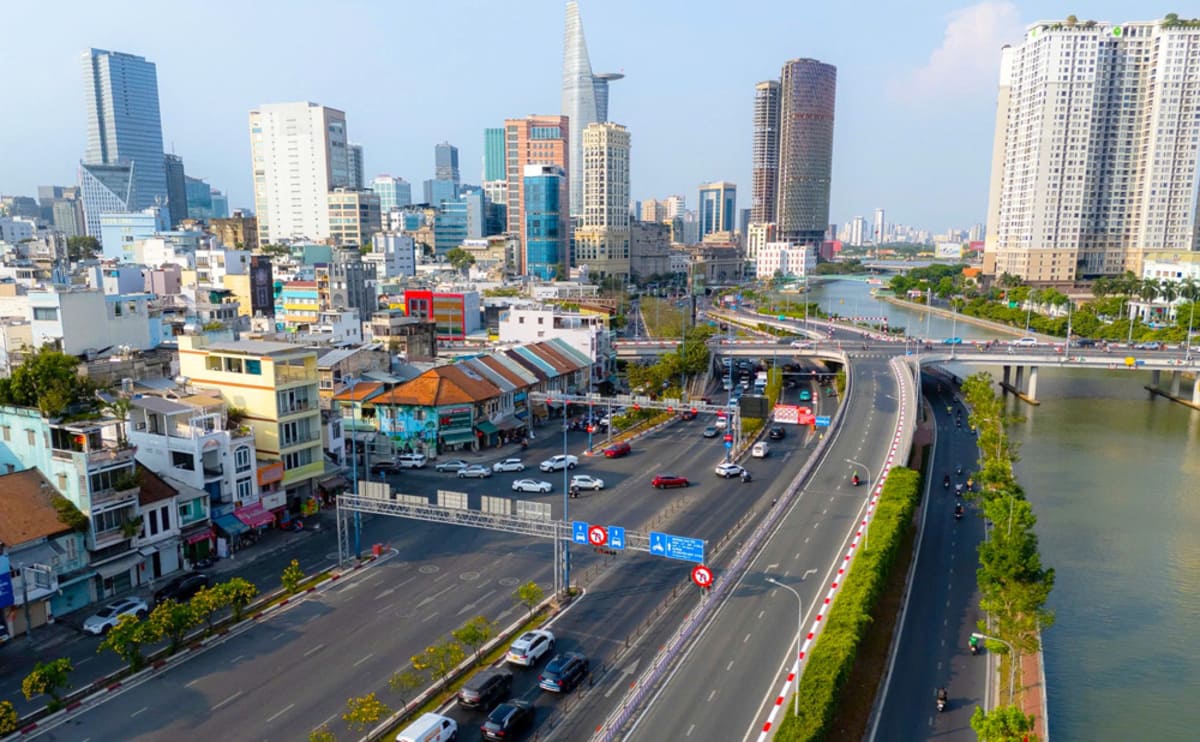
Transport connectivity determines how easily employees, customers, and partners can access the office. In Ho Chi Minh City and Hanoi, businesses should prioritise locations near major roads, with multiple access routes and convenient connections to areas where business transactions frequently take place.
When assessing transport conditions around a building, businesses should check:
- Access roads: Road width, one-way streets, turning points, and building entrances.
- Major transport routes: Connectivity to commercial districts, administrative centres, and neighbouring districts.
- Traffic congestion: Traffic volumes during morning and evening peak hours.
- Public transport: Accessibility by bus, metro, and transport interchanges.
- Partner accessibility: Drop-off and pick-up areas, parking facilities, and ease of locating the address.
Businesses that frequently receive clients should prioritise buildings with easily recognisable addresses, clearly defined access routes, and suitable pick-up and drop-off areas. For locations along roads that regularly experience congestion, businesses should also assess alternative access routes before making a leasing decision.
2.2 Convenient commuting for employees
A conveniently located office helps reduce commuting pressure and supports businesses in maintaining a stable workforce. When selecting a location, businesses should consider where most employees live, transport connectivity, and the main commuting routes. They should also assess travel times during peak hours and consider how accessible the location will be to future candidates to minimise inconvenience and additional commuting costs.
2.3 Concentration of companies in the same industry
Choosing a location near companies in the same industry, target customers, or related service providers can facilitate business transactions and cooperation. However, the importance of this factor depends on the nature of the industry and how frequently each business needs to meet others in person.
The following areas can be included in the shortlist for further assessment by industry in Ho Chi Minh City and Hanoi.
| Industry | Ho Chi Minh City | Hanoi |
|---|---|---|
| Technology and software | Tan Binh, Thu Duc City, District 3 | Cau Giay, Duy Tan, Nam Tu Liem |
| Finance and insurance | District 1, Thu Thiem area | Hoan Kiem, Ba Dinh, Tran Hung Dao |
| Media and advertising | District 1, District 3, Binh Thanh | Dong Da, Cau Giay |
| Logistics and freight forwarding | Tan Thuan, Cat Lai, Tan Binh areas | Long Bien, Bac Tu Liem |
Note: The table suggests office rental areas by industry and does not reflect actual business density. Businesses can refer to Maison Office’s Hanoi office market report and Ho Chi Minh City office market report, which are updated quarterly, to obtain additional information when selecting a suitable location.
According to Maison Office’s market research, in Ho Chi Minh City, District 1 and Thu Thiem are areas with a concentration of financial, banking, and professional service activities. Tan Binh benefits from its connectivity to the airport, making it suitable for logistics, import-export, and trading businesses. In Hanoi, Duy Tan–Cau Giay is a prominent office cluster for technology companies, while Hoan Kiem and Ba Dinh are suitable for financial institutions, consulting firms, and professional service providers.

2.4 Surrounding amenities and services
The surrounding amenities affect employees’ daily routines and a business’s ability to serve customers visiting the office. Locations near banks, restaurants, convenience stores, parking facilities, and commercial areas are generally more convenient for businesses that frequently conduct face-to-face transactions.
Amenities to consider include:
- Banks and financial services: Facilitate financial transactions and administrative tasks.
- Restaurants and cafes: Provide options for lunch, client reception, and business meetings.
- Parking facilities: Accommodate the motorbike and car parking needs of employees and customers.
- Retail and commercial services: Include supermarkets, convenience stores, courier services, and printing facilities.
- Other support services: Include healthcare facilities, accommodation, and conference centres when businesses require regular access to them.
During site inspections, businesses should assess the accessibility and usage costs of nearby amenities rather than relying solely on distances shown on maps. In particular, buildings with limited car parking facilities require businesses to confirm alternative parking arrangements outside the building and their capacity to accommodate visiting clients.
2.5 Rental rates and total costs
The total cost of occupying an office should be determined before selecting a rental area. Even two buildings with the same floor area and rental rate may incur different total costs due to service charges, air-conditioning electricity, parking fees, after-hours charges, and handover conditions.
Businesses should prepare a budget based on the following expenses:
| Cost item | What to check |
|---|---|
| Base rent | Rental rate, chargeable floor area, and applicable lease period |
| Service charges | Scope of services and costs already included |
| VAT | Applicable tax rate and taxable amount |
| Electricity and air-conditioning | Usage rates and operating hours |
| Parking fees | Number of spaces and rates for motorbikes and cars |
| After-hours charges | Air-conditioning, electricity, services, and other additional expenses |
| Interior fit-out costs | Design, construction, renovation, and reinstatement of the premises |
Reference formula:
Monthly costs = Rent + Service charges + Electricity and air – conditioning + Parking fees + Other operating expenses + VAT
The investment in office interior design and fit-out and the office rental security deposit should be budgeted separately as part of the initial cash flow plan. A security deposit that is refundable under the lease terms should not be counted in full as an actual rental expense.
When comparing central locations with areas outside the city centre, businesses should calculate costs using the same usable floor area, lease term, and cost inclusions. This approach helps determine the actual budget differences and avoids making decisions based solely on advertised rental rates while overlooking expenses incurred during daily operations.

2.6 Industry and operating model
The office rental location should suit the business’s operational characteristics, workforce size, and transaction frequency. Companies that frequently receive clients may prioritise central commercial areas, while technology businesses or internal operations teams should consider floor space, recruitment needs, and long-term budget requirements.
The following table suggests suitable office locations for different operating models:
| Business type | Suitable rental locations | Factors to consider |
|---|---|---|
| Finance, legal, and consulting | District 1, Hoan Kiem, Ba Dinh | Corporate image, client reception, rental costs |
| Startups and technology companies | Tan Binh, Thu Duc City, Cau Giay, Nam Tu Liem | Budget, talent availability, space expansion |
| Agencies and media companies | District 3, Binh Thanh, Dong Da, Cau Giay | Client connectivity, amenities, working space |
| Trading and service businesses | Areas near key customers and partners | Transport, parking, transaction convenience |
| Logistics and freight forwarding | Tan Binh, Cat Lai, Long Bien | Logistics connectivity, airport access, transport routes |
Businesses should choose a location and office type that match their operating characteristics, workforce size, and budget. A traditional office suits businesses that need a stable workspace and greater control over the layout, while a serviced office enables faster operations and reduces initial interior fit-out costs. Before committing to a lease, businesses should therefore check actual space availability and consider their intended use of the premises.
2.7 Office expansion potential
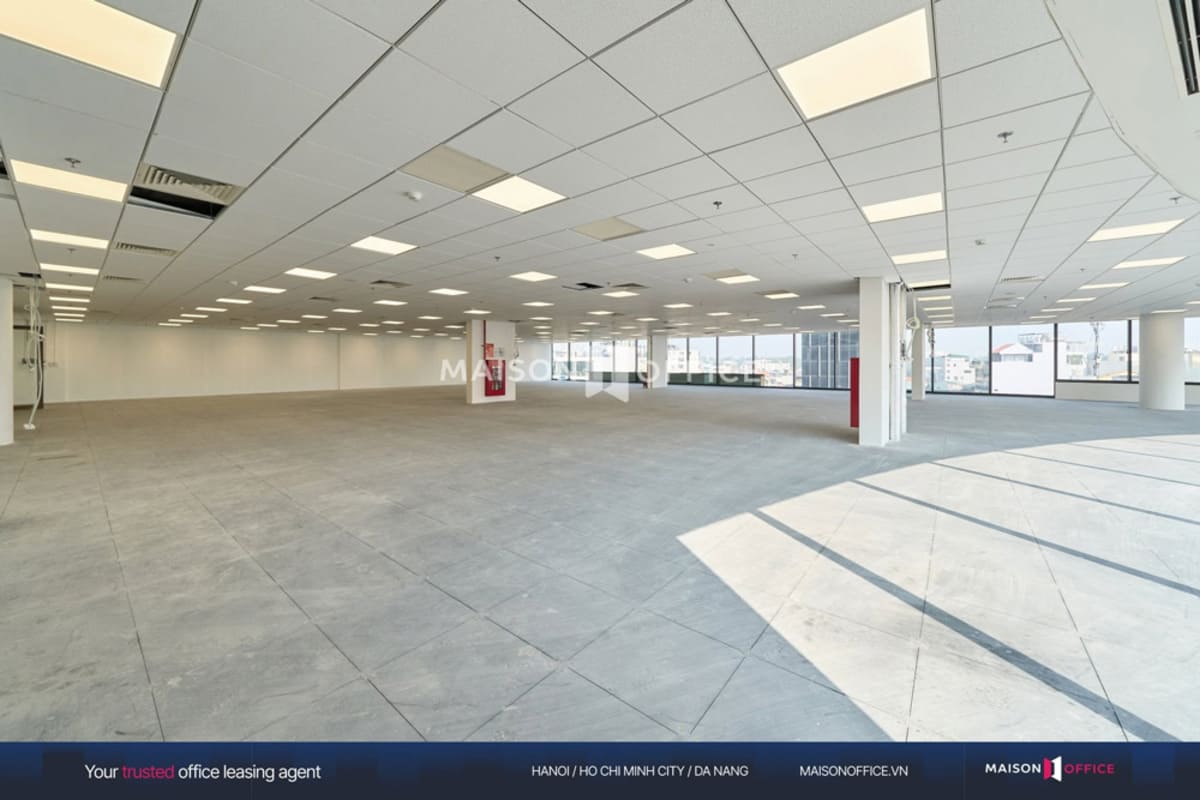
Expansion capacity is a factor to assess when a business expects to increase its workforce or add departments in the future. Buildings with large floor plates, flexible layouts, or multiple office floors may provide additional expansion options without requiring the company to change its registered headquarters address.
Before signing a lease, businesses should confirm the following:
- Available space: Whether adjacent premises or additional space on the same floor can be leased.
- Floor plate size: How the space can be subdivided and whether it can accommodate additional employees.
- Nearby supply: Comparable buildings that could be considered if a larger premises is needed.
- Lease terms: Priority rights to lease additional space, renewal periods, and arrangements for changing the leased area.
- Operational capacity: Whether elevators, parking facilities, and technical systems can accommodate a larger workforce.
For businesses planning significant expansion, areas in western Hanoi, such as Cau Giay and Nam Tu Liem, may be included in the shortlist due to their diverse office supply. According to the Cushman & Wakefield report, office supply in Hanoi is expanding beyond traditional central districts, particularly into western office clusters.
However, a large supply of office space in an area does not guarantee that the building a business currently occupies will have additional space available. Businesses should confirm current availability and the terms for leasing additional space directly with the landlord.
2.8 Legal compliance, security, and building management
Legal compliance and the quality of building management and operations directly affect the ability to use an office reliably throughout the lease term. Before selecting a location, businesses should verify the building’s permitted use, the landlord’s authority to lease the premises, the lease terms, and the safety systems required for office operations.
The following items should be verified:
- Building legal status: Documents proving the right to lease the premises, the permitted use of the building, and its eligibility for office operations.
- Lease agreement: Office lease term, security deposit, payment terms, rent increases, renewal provisions, and the responsibilities of each party.
- Fire safety: Fire prevention and firefighting documentation appropriate to the building, emergency exits, and safety systems.
- Security and access control: Surveillance cameras, security personnel, access cards, or visitor management systems.
- Management provider: Maintenance procedures, incident response, cleaning, and tenant support.
- After-hours operations: Building access rules, air-conditioning and elevator availability, and related fees.
Businesses should inspect the security systems, elevators, air-conditioning, basement, and emergency exits before leasing an office. Companies that operate outside regular business hours or run multiple shifts should confirm access to facilities beyond standard business hours and cross-check the relevant conditions against quotations, legal documents, or lease appendices to minimise unexpected costs and disputes after signing.
3. Where Should You Lease an Office in Ho Chi Minh City and Hanoi?
Businesses should choose an office rental area based on their budget, industry, customer locations, and space requirements. In Ho Chi Minh City, District 1 and District 3 are suitable for businesses that prioritise central business transactions, while Tan Binh, Thu Duc City, and District 7 offer distinct advantages in connectivity and office supply. In Hanoi, Hoan Kiem remains a traditional commercial centre, while Cau Giay and Nam Tu Liem are suitable for businesses seeking a wider range of office sizes and grades.
3.1 Office rental areas in Ho Chi Minh City
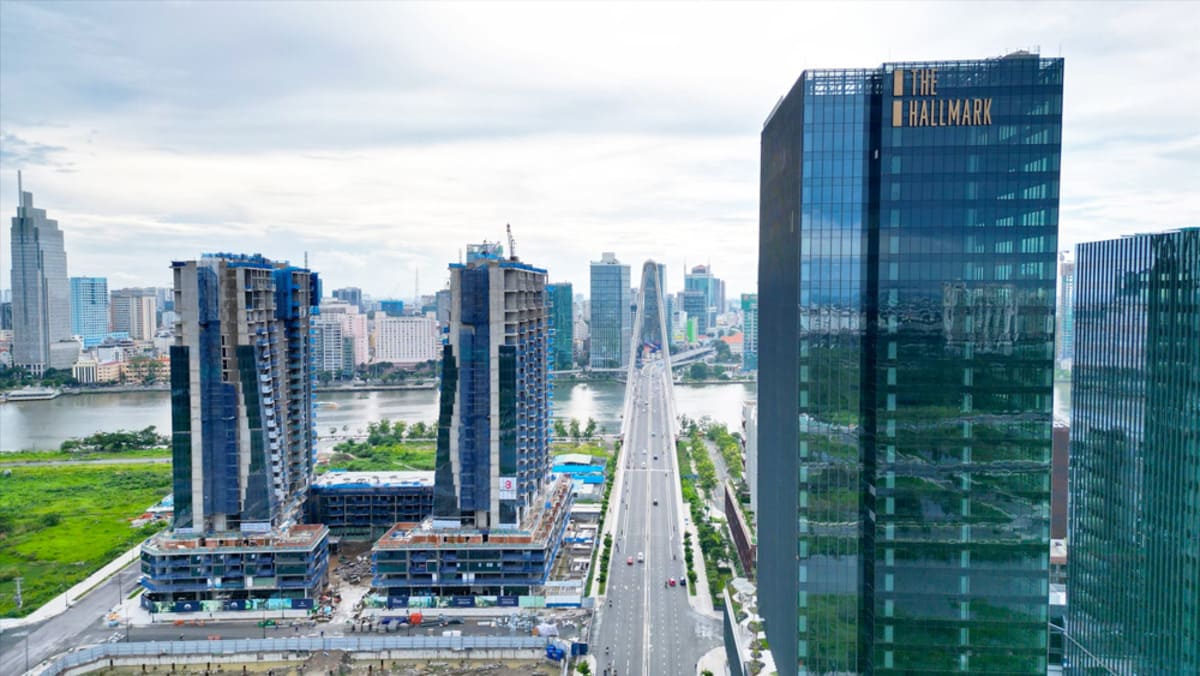
The supply of offices for rent in Ho Chi Minh City is distributed across multiple office clusters, each with different supply characteristics and tenant profiles. Businesses should select an area based on transaction frequency, operating locations, and workforce requirements rather than prioritising a central address alone.
| Area | Location characteristics | Suitable businesses |
|---|---|---|
| District 1 | Financial and commercial centre with a concentration of Grade A and B offices | Finance, banking, legal services, consulting, multinational corporations |
| District 3 | Adjacent to District 1, with connections to multiple central roads | Agencies, technology companies, consulting firms, service businesses |
| Tan Binh | Near Tan Son Nhat International Airport, with connections to Phu Nhuan and the western part of the city | Aviation, logistics, import-export, trading businesses |
| Thu Duc City | Includes office clusters in Thu Thiem, An Phu, and the high-tech park area | Technology, finance, R&D, businesses requiring large floor plates |
| District 7 | Located in southern Saigon, with prominent areas such as Phu My Hung and Nguyen Van Linh | FDI enterprises, manufacturing, logistics, technology, trading businesses |
Areas are grouped according to familiar administrative boundaries before the administrative adjustments to support office market searches and comparisons.
According to Maison Office’s Ho Chi Minh City office market report, office supply is expanding across several clusters outside the traditional city centre, particularly in Thu Thiem and District 7. These areas should be included in comparisons when businesses prioritise large floor plates, building quality, and expansion potential.
Recommendation: Businesses that frequently meet customers in the central business district (CBD) should prioritise District 1 or District 3. Tan Binh is better suited to businesses requiring convenient airport access, while Thu Duc City and District 7 are worth considering when business operations or employees are concentrated in the eastern and southern parts of the city.
3.2 Office rental areas in Hanoi
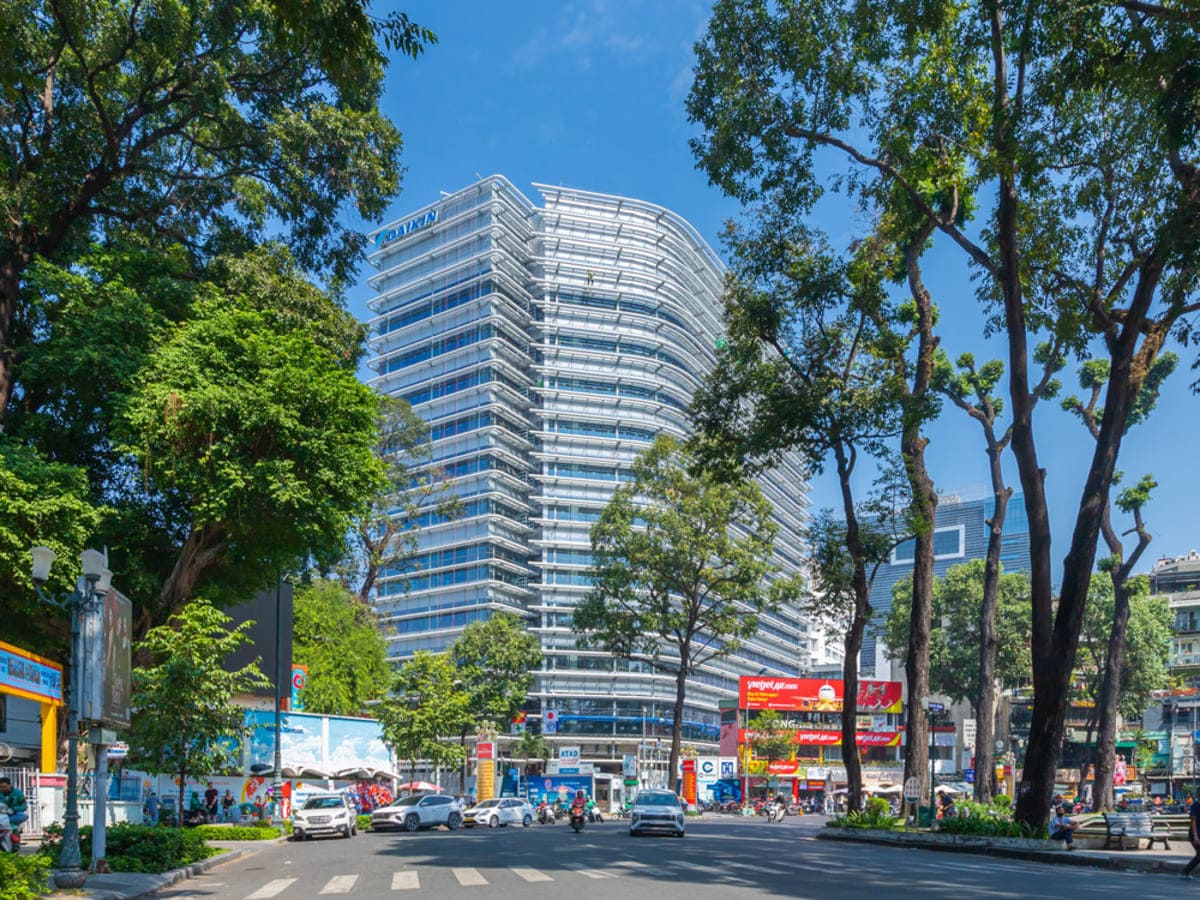
The supply of offices for rent in Hanoi is concentrated in the traditional city centre and office clusters expanding towards the west. Hoan Kiem is suitable for businesses that need a central business address, while Cau Giay and Nam Tu Liem offer a more diverse supply in terms of building size and leasable floor area.
| Area | Location characteristics | Suitable businesses |
|---|---|---|
| Hoan Kiem | Traditional commercial and financial centre | Banks, legal firms, audit firms, consulting firms, international organisations |
| Cau Giay | Western office cluster connected to Duy Tan, Tran Thai Tong, and Pham Hung | Technology, telecommunications, FDI enterprises, medium-sized and large businesses |
| Nam Tu Liem | My Dinh and Pham Hung areas, with many buildings offering large floor plates | Technology, trading businesses, companies planning to expand |
| Dong Da | Extended central area connected to Hoan Kiem, Ba Dinh, and Cau Giay | Consulting, services, media, small and medium-sized businesses |
| Long Bien | Eastern Hanoi, connected to interregional transport routes | Logistics, trading, distribution, businesses operating in eastern Hanoi |
Areas are classified according to market characteristics and leasing needs and do not represent current administrative boundaries.
According to Maison Office’s Hanoi office market report, Cau Giay is one of the areas with a substantial supply of office space in Hanoi. Office supply continues to expand towards western areas, providing corporate tenants with additional options.
Recommendation: Finance, legal, and consulting businesses that frequently conduct transactions in the city centre may prioritise Hoan Kiem. Cau Giay and Nam Tu Liem are better suited to technology companies, businesses with large workforces, or those requiring room for expansion. Dong Da offers a balanced location, while Long Bien is suitable for businesses whose operations are concentrated in eastern Hanoi.
3.3 Should you lease an office in or outside the city centre?
Offices in the city centre suit businesses that prioritise brand image and frequently conduct face-to-face transactions, while areas outside the centre generally offer more options in terms of floor space, budget, and expansion potential. Businesses should compare their options based on equivalent building grades, total occupancy costs, and actual operational requirements.
| Criteria | Central areas | Areas outside the city centre |
|---|---|---|
| Budget | Rental rates are generally higher | More price segments to choose from |
| Corporate image | Benefits of a CBD or financial district address | Depends on the building’s quality and location |
| Customer accessibility | Convenient for partners based in the city centre | Suitable for customers in specific surrounding areas |
| Workforce | Convenient if employees work or live nearby | Suitable for teams concentrated in neighbouring areas |
| Expansion potential | May be limited in existing buildings | More options for large floor plates in emerging office clusters |
Businesses should prioritise central locations when they frequently receive clients, conduct transactions with financial institutions, or require a headquarters address in a central business district (CBD). Conversely, technology companies, trading businesses, and companies planning to increase their workforce may consider areas outside the city centre to find space that fits their budgets.
Before making a decision, businesses should compare total rental costs, employee commuting convenience, available floor space, and lease terms across at least two options with equivalent standards. This helps them identify the practical benefits of each location rather than choosing solely on the basis of the address or advertised rental rate.
4. How to evaluate and choose a suitable office location
To choose a suitable office rental location in Ho Chi Minh City or Hanoi, businesses should follow three steps: identify priority criteria, score potential locations, and conduct on-site inspections before signing a lease. This process helps compare locations against consistent standards, control the budget, and minimise potential risks during the leasing process.
4.1 Identify priority criteria before searching for an office
Businesses should distinguish between mandatory criteria and flexible preferences before searching for office space. Clearly defining requirements helps narrow down the list of potential locations and avoids wasting time inspecting options that do not meet operational needs.
| Criteria group | Assessment requirements | Examples |
|---|---|---|
| Mandatory | Conditions that must be met for the business to lease the office | Maximum budget, minimum floor area, legal compliance, fire prevention and fighting safety |
| Flexible | Conditions that can be adjusted or traded off | Distance from the city centre, nearby amenities, leased floor, building image |
Financial and consulting firms that frequently receive clients may prioritise central locations and easily recognisable business addresses. Meanwhile, technology companies with large on-site teams should focus on commuting convenience, rental costs, and the availability of additional space for expansion. Priority criteria should be agreed upon by management, human resources, and administration teams before conducting site visits.
4.2 Create a scoring matrix for office locations
A scoring matrix helps businesses objectively compare potential office locations using the same set of criteria. Each factor is assigned a weighting based on its impact on business operations, then rated on a scale of 1 to 5.
The following is a sample scoring matrix for businesses looking to lease office space in Ho Chi Minh City or Hanoi.
| Assessment criteria | Weighting | Rating |
|---|---|---|
| Transport connectivity | 25% | 1–5 |
| Employee commuting convenience | 20% | 1–5 |
| Total rental costs | 25% | 1–5 |
| Amenities and client reception convenience | 10% | 1–5 |
| Suitability for the operating model | 10% | 1–5 |
| Expansion potential | 10% | 1–5 |
| Total | 100% | Up to 100 points |
The weightings proposed by Maison Office are intended as a sample assessment framework, not a mandatory standard. Businesses can adjust them to suit their operational characteristics.
Scoring formula: Total score = Σ (Criterion score / 5 × Weighting)
For example, a location that scores 4 out of 5 for transport connectivity, with a weighting of 25%, receives 20 out of 25 points for this criterion. The combined scores are then used to rank locations and determine which options should proceed to further inspection.
Businesses should assess at least three locations using the same scoring scale, floor area, and cost scope. Options that fail to meet mandatory requirements regarding budget, legal compliance, or safety should be eliminated before scoring.

4.3 Conduct on-site inspections and verify information before leasing
An on-site office inspection helps businesses verify information that cannot be fully assessed through photos, maps, or quotations. During a site visit, businesses should examine transport conditions, office space quality, and the building’s operational capabilities.
Checklist of items to inspect:
- Transport: Check access roads, traffic congestion during peak hours, and passenger pick-up and drop-off areas.
- Amenities: Confirm the availability of parking, banks, restaurants, and services for employees.
- Costs: Cross-check rent, service charges, VAT, electricity, parking fees, and after-hours surcharges.
- Office space: Check the actual usable area, handover condition, and feasibility of arranging departments.
- Legal compliance: Verify the landlord’s right to lease the premises, permitted use, lease conditions, and fire prevention and fighting documentation.
- Building operations: Check elevators, air conditioning, backup generators, security, and after-hours access policies.
After the inspection, businesses should consolidate the findings in a comparison table, update the scores, and request written confirmation of commercial terms from the landlord. A deposit should only be paid once the selected option meets all mandatory requirements, the total cost falls within budget, and key lease terms have been clarified.
Choosing an office rental location in Ho Chi Minh City or Hanoi requires balancing transport connectivity, rental costs, workforce needs, and long-term development plans. Businesses should define their priority criteria, compare multiple areas, and conduct on-site inspections before making a decision to find premises that suit their operations.

Contact Maison Office for advice on choosing a suitable office rental location in Ho Chi Minh City, Hanoi, or Da Nang. Businesses can receive the latest quotations, updated availability information, and lists of buildings tailored to their needs, along with support for site inspections and lease negotiations.
5. (FAQ) – Frequently asked questions about choosing an office rental location
5.1 Should businesses lease an office near the city centre or near where employees live?
Businesses should prioritise central offices if they frequently receive clients, meet business partners, and require a headquarters address in a commercial or financial district. Conversely, businesses with large on-site teams should consider locations that offer convenient commutes for most employees. The decision should be based on the frequency of client meetings, employees’ residential areas, and the rental budget.
5.2 Which office locations should businesses with limited budgets prioritise?
Businesses with limited budgets should prioritise areas outside the city centre that offer convenient transport connections and a range of Grade B and Grade C office options. In Ho Chi Minh City, they may consider Tan Binh, District 7, or Thu Duc. In Hanoi, Cau Giay, Nam Tu Liem, and Long Bien are worth exploring. Before making a decision, businesses should compare total rental costs, usable floor area, and handover conditions.
5.3 How can businesses assess whether an office location has growth potential?
An office location with growth potential should offer suitable transport infrastructure, office supply, amenities, and opportunities to expand the leased area. Businesses should review approved infrastructure projects, local development plans, and the future supply of office buildings. They should also assess actual leasing demand and whether the location can accommodate workforce growth, rather than choosing a location based solely on anticipated development.
5.4 What should businesses inspect before deciding to lease an office?
Before leasing an office, businesses should inspect access roads, peak-hour traffic conditions, parking facilities, nearby amenities, and the condition of the premises. Inside the building, they should check elevators, air conditioning, fire prevention and fighting systems, security, and the availability of after-hours access. Businesses should also confirm the usable area, total costs, handover conditions, and lease terms before paying a deposit.
5.5 How does an office rental location affect operating costs?
An office location directly affects rental rates, parking fees, employee commuting expenses, and additional operating costs. Central areas in Ho Chi Minh City and Hanoi generally have higher rental rates than areas outside the city centre within the same market segment. Businesses should compare the total cost of occupying an office, including service charges, VAT, and related surcharges, to choose a location that fits their long-term budget.


