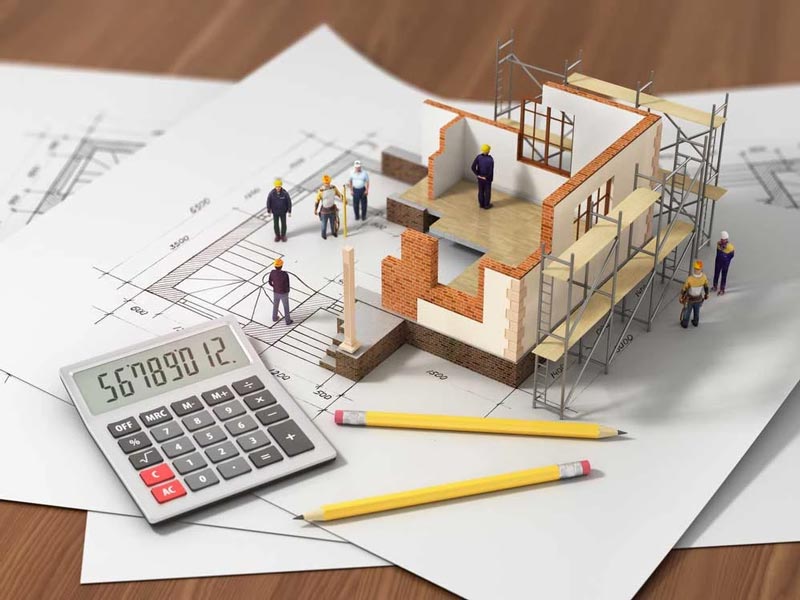
Tool to calculate area and suggest suitable office locations. Helps you quickly find the right place
Suggested suitable area
70m2
Work area 0%
Meeting room, training 0%
Pantry, dining room 0%
Private room 0%
Other rooms 0%
The above calculation tool uses the most common standards for office area estimation. Unable to accurately meet other practical needs that arise during business operations
In the process of searching for an ideal workspace, accurately determining the office leasing area is a key factor that helps your business optimise costs and make better use of space. A clear understanding of how office leasing area is calculated can help you avoid common mistakes and make faster, more informed leasing decisions.
1. Common Types of Office Leasing Area
When choosing an office for lease, understanding different types of office area is essential, as it helps businesses make more accurate decisions when comparing buildings and reviewing lease terms. The two most common area types in office lease agreements are Net Area and Gross Area.
1.1 Net Area
Net Area, also known as usable area, refers to the actual space that a tenant pays rent for and directly uses. Specifically, Net Area is measured from the wall to the partition line and does not include shared areas such as corridors, lobbies, common restrooms, or other shared spaces within the building.
Net Area includes private spaces such as the office area, meeting rooms, and internal workspaces within the leased premises. If the leased space contains columns or other structural elements, the area occupied by these elements is also included in the Net Area.
1.2 Gross Area
Gross Area refers to the total area, including the space used by the tenant for work purposes, known as the Net Area, plus shared areas such as corridors, lobbies, restrooms, and other common spaces that all tenants in the building are entitled to use.
Gross Office Area is often applied to businesses leasing an entire floor or a large portion of a floor, where the common areas mainly serve their operational needs. Gross Area can be convenient for large enterprises, as they do not need to share too much space with other tenants.
However, for small businesses or companies leasing only part of a building, Gross Area may not be the most cost-effective option because they may need to pay for shared spaces that they rarely use.
2. How to Calculate the Right Office Leasing Area
When choosing office space, accurately identifying the area that matches the actual needs of the business is extremely important. This helps optimise rental costs while ensuring an efficient and comfortable working environment for employees.
2.1 Calculating Office Area Based on Headcount
Calculating office area based on the number of employees is one of the most direct and effective approaches to ensure each employee has enough space to work comfortably. Depending on the standards and objectives of the business, the required office area can be adjusted as follows:
– Average standard – sufficient space: 5–6 m²/person: This is a common standard chosen by many businesses in Vietnam. It provides employees with sufficient working space while still maintaining cost efficiency.
– Cost-saving standard: 3–4 m²/person: Some businesses choose this standard to optimise office rental costs, especially when they need to reduce operating expenses while maintaining work efficiency.
– High standard: 7–10 m²/person: Businesses that want to create a spacious, comfortable, and creativity-driven workplace often apply this standard. It is especially suitable for Grade A office buildings, where workspace design is prioritised to support productivity and operational efficiency.
In addition, managers, directors, or executives often require larger and more private spaces to ensure a professional and quiet working environment. A director’s office usually ranges from 15 m² to 25 m², depending on the company’s scale and specific requirements.
2.2 Calculating Office Area Based on Usage Needs
In addition to calculating area based on headcount, businesses should also consider specific functional requirements when planning office interiors. Some areas need to be calculated separately, including:
Meeting rooms: Meeting rooms are essential in almost every business and are used for internal meetings, partner discussions, and client meetings. The area of a meeting room can range from 7.5 m² to 40 m², depending on the number of users and the purpose of each meeting.
Reception area: The reception area is the first space that clients and partners see when they visit the company. This area usually starts from 4 m² and can be expanded depending on the company’s reception scale and desired first impression.
Shared areas: Spaces such as pantry areas, break rooms, or storage areas should also be carefully calculated to ensure employees have suitable spaces for relaxation and efficient work.
By combining both methods, businesses can ensure that the selected office area provides enough room for employees while also meeting other operational needs, creating an efficient and well-optimised working environment.
3. Accurate Methods for Measuring Office Leasing Area
Accurately determining office area is an important factor that helps businesses optimise rental costs and make the most of their workspace.
3.1 Measuring from the Centreline of Walls and Partitions
Measuring from the centreline of walls and partitions is a method that calculates area based on the distance from the centreline of the walls to the internal partitions within the office.
This area includes the space occupied by surrounding walls, partitions, floor columns, and other technical structures. It is a common calculation method often used in office lease agreements, as it includes all architectural elements within the leased space.
3.2 Measuring Clear Internal Area
Clear internal area measurement, also known as usable internal measurement, excludes the thickness of walls, partitions, columns, or plaster layers. This method measures the actual floor surface area after excluding surrounding architectural elements.
This area is usually smaller than the area measured from the centreline of walls and is suitable for businesses that want to calculate the actual usable workspace more precisely, especially when leasing only part of a building.
3.3 Measuring from the Outer Edge of Walls and Office Enclosure Partitions
Measuring from the outer edge of walls and office enclosure partitions is the most comprehensive method, as it includes the built-up area of the building. This area includes all parts from the outer surface of the walls and partitions to other structural components of the building.
Compared with clear internal area measurement, the area calculated from the outer edge is usually 3–5% larger. Businesses should consider this method carefully, as rent based on this area may be higher, although it may also reflect a broader allocation of the office space.
4. Key Notes When Calculating Office Leasing Area
When choosing and calculating office leasing area, businesses should pay attention to several important factors to ensure an efficient workspace and optimise rental costs.
4.1 Non-Usable Office Areas
When selecting an office, businesses should pay attention to non-usable areas, such as hidden corners, small fragmented rooms that cannot be used effectively, or spaces divided by architectural elements. These areas may not be suitable for working needs and can result in wasted space.
4.2 Use Consistent Measurement Units
Measurement units such as square metres (m²) should be consistent throughout the negotiation process and lease agreement. Using a unified measurement unit helps prevent misunderstandings and unnecessary disputes between the landlord and tenant.
4.3 Measure and Verify the Office Area Carefully
Before signing a lease agreement, businesses should measure and carefully verify the actual office area. This can be done by engaging a design consultant or an independent measurement unit to ensure accurate figures and avoid potential issues later.
4.4 Use Suitable Office Partitions
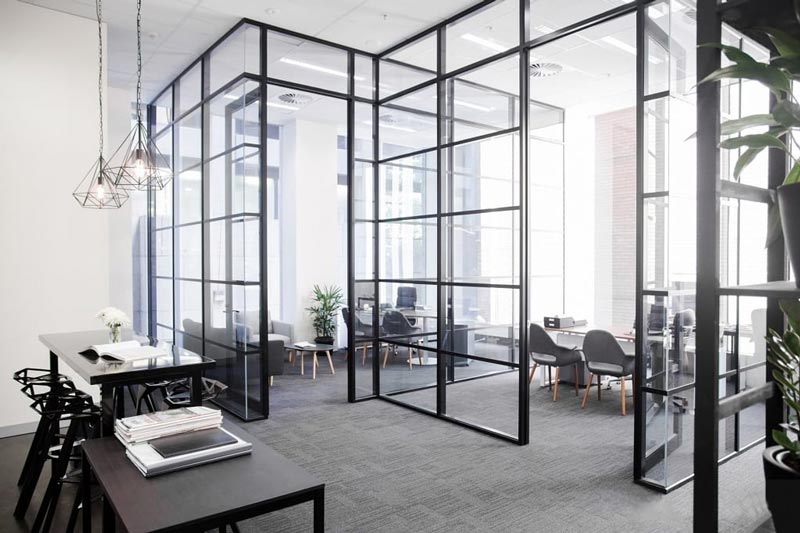
When designing office space, the use of partitions plays an important role in optimising the area. Mobile partitions or tempered glass partitions can divide space flexibly while maintaining necessary privacy without wasting usable area.
5. Frequently Asked Questions About Calculating Office Area
5.1 Which Office Area Calculation Method Helps Save Costs?
For businesses looking to save costs, calculating based on Net Area is usually the most optimal option. Net Area only includes the actual space used by the business, excluding shared areas such as corridors or lobbies. This helps optimise the office rental budget and is suitable for companies with limited budgets that still need an efficient working environment.
5.2 What Should Businesses Do After Calculating the Required Office Area?
After determining the required office area, the next step is to conduct on-site inspections and compare different office buildings to find the most suitable option. Businesses should evaluate factors such as location, facilities, infrastructure, rental price, and lease terms carefully to secure the best possible leasing conditions.
5.3 Are Office Rental Prices on Websites Calculated Based on Gross Area or Net Area?
When leasing an office, businesses should identify both Gross Area and Net Area to fully understand the lease agreement and rental cost. Office rental prices listed on websites are usually calculated based on Net Area, while Gross Area helps determine the total area that the business may use or access.
Accurately calculating office leasing area is not only a necessary skill but also an important factor in choosing the right workspace. By applying the detailed guidelines above, businesses can make more informed decisions, optimise costs, and ensure that the selected office space meets their actual operational needs.


 Việt Nam
 English