Việt Nam
 English

Renew the Current Office Lease or Relocate to a New Office?

 12 min read
505
12 min read
505

Deciding whether to renew the current office lease or move to a new office directly affects a company’s budget, operating efficiency and growth plan for the next lease cycle. Each option has distinct advantages, risks and conditions. Before deciding, a business should assess space, location, building quality, total occupancy cost and lease terms as a complete package.
Table of Contents
- 1. Comparing office lease renewal and relocation
- 2. When should a business renew its current office lease?
- 2.1 The space still meets operating needs
- 2.2 Headcount is expected to remain stable
- 2.3 The location remains convenient for employees and clients
- 2.4 The building still supports operations
- 2.5 Total occupancy cost remains reasonable and competitive
- 2.6 Better renewal terms can be negotiated
- 2.7 The business prioritises cash-flow stability
- 2.8 No better alternative is available
- 3. When should a business relocate to a new office?
- 4. Points to review before renewing an office lease
- 5. Points to review before moving office
- 6. Evaluation table for renewal and relocation
- 7. How early should the evaluation begin?
- 8. How Maison Office supports office searches
- 9. Frequently asked questions about renewing or relocating an office
1. Comparing office lease renewal and relocation
Renewing the current office and relocating to new premises each have advantages and limitations. The right option depends on total cost, implementation time, operational disruption, the ability to meet workspace needs and the company’s development plans.
| Criterion | Renew the current office | Move to a new office |
| Upfront cost | Usually lower because existing furniture, equipment and infrastructure can remain in use | Usually higher due to the deposit, design, fit-out, moving and reinstatement of the former premises |
| Implementation time | Shorter, with most work focused on negotiation and signing an addendum or new lease | Longer because the business must survey, select and negotiate premises, complete the fit-out and organise the move |
| Operational disruption | Low, because employees continue working at a familiar location | May affect operations if the fit-out and move are not tightly controlled |
| Ability to change the space | Limited by the existing area, structure and condition | Can be redesigned around headcount, working model and new operational needs |
| Office location | Keeps the current location | Creates an opportunity to select a location that is more convenient for employees, clients and partners |
| Brand image | Changes little unless the current office is substantially refurbished | Can improve the company’s image through a new location, building Grade and workspace design |
| Expansion capacity | Depends on vacant space and the current building’s policies | Allows the company to select an area suited to growth during the next lease cycle |
| Lease terms | Negotiation builds on the existing tenant relationship and current contract | The company may choose a different lease term, incentives and more flexible conditions |
| Financial risk | Usually lower in the short term, although refurbishment costs or rent increases may arise | Higher at the outset because of investment and transition costs |
| Long-term value | Suitable when the present office still meets operating needs | Suitable when the business needs substantial changes in area, location, infrastructure or image |
In the short term, renewal usually has an advantage in cost and stability. Relocation may deliver better long-term value when the current premises no longer support headcount, operating standards or the company’s development strategy.
Do not compare headline rent per sqm alone. Calculate the full occupancy cost, including rent, service charges, refurbishment and office fit-out, overlapping rent, moving costs and reinstatement of the former premises. A structured office leasing process makes these alternatives easier to compare on the same basis.
2. When should a business renew its current office lease?
A business should prioritise renewal when relocation costs are high, the location remains suitable for employees and partners, and the workspace has not become overcrowded.
2.1 The space still meets operating needs
Renewal may be preferable when the current area can support work, meetings, client reception and operations throughout the next lease cycle. The assessment should consider actual usable area, layout efficiency and whether the layout can be adjusted when required.
Factors to review include:
- Workstations: Enough seats for employees who regularly work in the office
- Functional areas: Sufficient meeting rooms, private offices, reception space, pantry, storage and collaboration areas
- Space efficiency: The area is used logically, without substantial unused or hard-to-plan zones
- Adaptability: The premises can be changed for new requirements without excessive cost
- Expansion: Adjacent space or a larger floor within the building may be available as the business grows
If the office is likely to meet demand for the next three to five years, renewal usually produces better value than investing in a new location. The company’s office size requirements should be checked against its expected headcount and working model.

2.2 Headcount is expected to remain stable
Renewal is suitable when the business does not expect major changes in employee numbers, departmental structure or working model during the next lease term.
The forecast should cover:
- Recruitment and headcount-reduction plans
- The proportion of employees working from the office
- The extent of hybrid or remote working
- Plans to create new departments or business units
- The number of contractors, temporary staff and visitors
- Potential mergers or corporate restructuring
When headcount remains stable, retaining the current office helps the business avoid surplus space or the cost of a larger office that will not be fully used. If headcount is expected to rise sharply or contract substantially, the company should test the premises’ capacity before committing to a long renewal.
2.3 The location remains convenient for employees and clients
Office location has a lasting effect on recruitment, employee experience and client access. A business can remain in place when the location still provides good connectivity and does not create material operating constraints.
Review the following criteria:
- Accessibility: Convenient access by motorbike, car or public transport
- Commute time: Reasonable for where most employees live
- Business connectivity: Close to clients, partners, banks, government offices or key business districts
- Parking: Adequate capacity for employees and visitors
- Nearby amenities: Restaurants, banks, hotels, shopping centres and other necessary services
- Visibility: An address that is easy to find and convenient for deliveries and client visits
For a business already associated with its current address, renewal also maintains continuity across transactions, legal records, recruitment and brand communications.

2.4 The building still supports operations
Renewal is appropriate when the building’s technical systems, management services and amenities continue to meet operating requirements. This judgement should be based on the tenant’s experience throughout the lease, not solely on the building’s Grade.
Inspect:
- Lift systems and peak-hour waiting times
- Air-conditioning, ventilation and indoor air quality
- Backup power and performance during power outages
- Internet, telecommunications and server-room infrastructure
- Security, access control and CCTV
- Fire prevention and firefighting standards
- Cleaning and maintenance of common areas
- Management response times when incidents occur
- Rules for overtime work and after-hours air-conditioning
- Capacity to meet the company’s specialist technical requirements
If existing issues are isolated and the landlord commits to rectifying them, the company can include those commitments in the renewal addendum to make responsibility and completion dates clear.
2.5 Total occupancy cost remains reasonable and competitive
The business should assess total occupancy cost rather than rent alone. Relevant items include rent, service charges, tax, parking, air-conditioning electricity, after-hours office usage fees, maintenance, refurbishment and periodic rent escalation.
Renewal is reasonable when the total cost reflects the quality received and is not materially above comparable buildings in the market. Cost per workstation should also be calculated for a more accurate view of space efficiency.
2.6 Better renewal terms can be negotiated
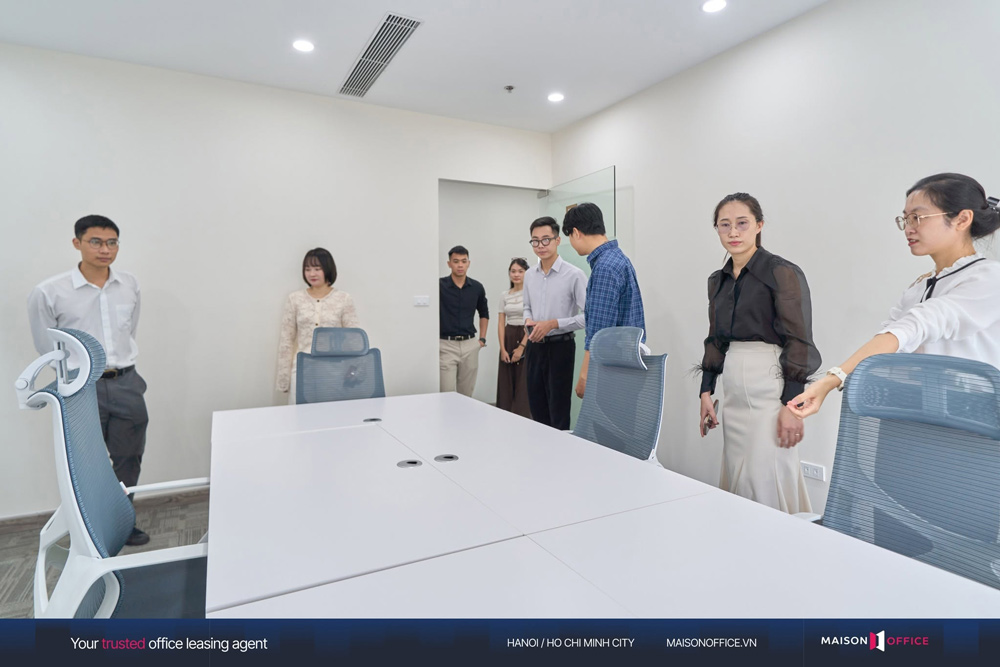
Renewal is an opportunity to review every commercial condition instead of carrying the old lease forward unchanged. An existing tenant may have some negotiating advantage because the landlord can avoid vacancy, remarketing time and brokerage costs. The company should prepare for office lease negotiations with market evidence and clear priorities.
Potential negotiation points include:
- Rent aligned with current market conditions
- A cap on periodic rent escalation
- Reduced or unchanged service charges
- Rent-free time for refurbishment
- A landlord contribution to repairs or upgrades
- A revised security deposit
- Priority rights to lease additional area
- The right to move to another area within the same building
- Assignment or subletting rights
- An early-termination clause subject to agreed conditions
- Priority renewal rights for the next lease cycle
- Clear landlord repair and maintenance responsibilities
If the landlord accepts favourable conditions, renewal may give the business more flexibility while reducing transition risk.
2.7 The business prioritises cash-flow stability
Renewal suits businesses that want to limit major short-term capital expenditure and direct funds to core operations. It can reduce the deposit, design and fit-out, transport, overlapping rent and reinstatement costs, particularly when the current furniture remains usable. The business should still weigh these savings against long-term operating costs and future growth requirements.
2.8 No better alternative is available
A business may renew when it has not found another office that meets its location, area, cost, infrastructure and handover requirements at the same time. If alternative premises do not offer better overall value, remaining in the current office preserves operational continuity and avoids unnecessary transition costs.

3. When should a business relocate to a new office?
Relocation is appropriate when the current office is overcrowded, the location no longer works for employees or partners, or the current lease is approaching expiry and a stronger alternative is available.
3.1 The office is overcrowded
When headcount increases without a corresponding increase in area, the office can run short of workstations, meeting rooms and expansion capacity. If the premises are difficult to reconfigure or the building cannot provide more space, the business should begin looking for an office suited to its three-to-five-year growth plan.
3.2 The proposed rent increase is not justified
A business should consider moving when the proposed rent is materially above the market or does not reflect the quality of the premises and services. Before deciding, compare total occupancy cost across buildings of the same Grade, area and handover condition, then negotiate rent, incentives and related terms.

3.3 The location is affecting recruitment and operations
Office location directly affects access for employees, clients and partners. A location that once worked may become restrictive as the company changes its target market, headcount or operating footprint.
Consider relocation when:
- Most employees face long commute times
- The area has frequent congestion or weak transport links
- Candidates decline roles because the office is inconvenient
- The building cannot provide adequate parking
- The office is far from clients, partners or important business areas
- Nearby amenities do not support work or client meetings
For sectors that compete heavily for talent, including technology, finance, consulting and professional services, a convenient location can support recruitment, retention and operating efficiency.
3.4 The building is deteriorating or its infrastructure is outdated
Overloaded lifts, unstable air-conditioning, limited backup power, poor internet or declining building management can directly disrupt operations. If the landlord has no clear upgrade plan, moving to a building with stronger technical standards may be the better option.
3.5 The business needs to reposition its brand
A company may relocate as it enters a growth phase, expands into new markets or seeks to upgrade its brand image. A stronger location, professional building and modern workspace can improve client reception, support recruitment and present the company’s position more clearly.

4. Points to review before renewing an office lease
Before signing an addendum or new lease, review the cost, commercial conditions and the office’s ability to support the next cycle.
- Check the renewal notice period: Confirm the contractual deadline so the business does not lose priority rights or enter negotiations from a weak position.
- Reassess space requirements: Forecast headcount, working model and area needs for the next three to five years before committing to a new term.
- Survey market rents: Compare rent, service charges, incentives and handover conditions among buildings of the same Grade, area and size.
- Calculate total occupancy cost: Include service charges, parking, after-hours air-conditioning, refurbishment, rent escalation and other operating expenses.
- Review the premises: Inspect the fit-out, air-conditioning, electricity, internet, fire safety, lifts and any items requiring repair.
- Negotiate the renewal package: Discuss rent, rent-free refurbishment time, upgrade support and a lower deposit where appropriate.
- Control rent escalation: State the escalation rate, effective date and adjustment basis clearly in the lease.
- Add flexible provisions: Consider expansion, contraction, relocation within the building, assignment, subletting and early termination rights.
- Clarify repair duties: Specify the landlord’s responsibilities, incident-response timing and handover standards after any works.
- Keep an alternative: Continue surveying selected offices to test the renewal proposal and maintain negotiating leverage.

5. Points to review before moving office
Before moving, prepare the budget, programme, contracts and operating plan carefully to reduce additional costs and business disruption.
- Define the new requirement: Set the area, workstation count, location, building Grade, budget and technical criteria before surveying the market.
- Forecast headcount: Calculate three-to-five-year demand, including recruitment, hybrid work and possible departmental expansion.
- Budget the full move: Allow for the deposit, design, fit-out, furniture, transport and incidental fees in addition to rent and service charges.
- Review termination terms: Confirm notice, payment obligations, the deposit and all conditions for surrendering the current premises.
- Clarify reinstatement: Confirm demolition scope, reinstatement standards, working hours, after-hours fees and responsibility for remaining assets.
- Limit overlapping rent: Coordinate handover, fit-out and relocation to avoid paying for two offices for an extended period.
- Check handover conditions: Confirm the condition, handover date, rent-free period and each party’s fit-out responsibilities.
- Assess infrastructure: Inspect electricity, air-conditioning, internet, lifts, fire safety, parking and after-hours rules.
- Build a detailed move plan: Assign an owner, phase the programme and prioritise critical teams to maintain business continuity.
- Update corporate information: Plan changes to the registered address, invoices, bank accounts, website, legal records, signage and transactional documents.
- Notify employees and partners early: Provide sufficient notice, the new address, travel instructions and the new-office working plan.
- Prepare for delays: Maintain a contingency plan if fit-out, inspection, infrastructure installation or handover falls behind schedule.
A detailed new-office task checklist helps assign owners and sequence the work before relocation begins. Include hidden office costs in the financial comparison rather than treating rent as the full budget.
6. Evaluation table for renewal and relocation
Use the table below to compare the two options against important criteria. Score each criterion from 1 to 5, where a higher score means the option is a better fit.
| Evaluation criterion | Renew current office (1-5) | Move to new office (1-5) |
| Space meets needs for the next 3-5 years | ||
| Ability to expand or contract | ||
| Fit with projected headcount | ||
| Location and connectivity | ||
| Building quality and management services | ||
| Technical infrastructure and operating capacity | ||
| Total occupancy cost over the lease term | ||
| Upfront investment | ||
| Operational disruption | ||
| Flexibility of lease terms | ||
| Employee experience and talent attraction | ||
| Fit with brand image | ||
| Total score |
Scores should be based on actual data, including the renewal quotation, refurbishment costs, relocation costs, market availability and workforce plans. The higher-scoring option is usually the stronger overall fit, but give additional weight to criteria that directly affect operations, such as area, total cost, location and technical infrastructure.
If the totals are similar, continue negotiating with the current landlord and inspect more alternatives before deciding. A consistent set of office-space evaluation criteria will make the comparison more reliable.
7. How early should the evaluation begin?
Start evaluating renewal or relocation about 9-12 months before the lease expires. For a large office, complex technical requirements or a decision requiring several approval levels, begin 12-18 months in advance.
12-18 months before expiry: Assess long-term demand
- Forecast headcount and the working model
- Check whether the current area can meet future demand
- Review the contractual renewal-notice deadline
- Set the budget and leasing criteria for the next cycle
9-12 months before expiry: Survey the market
- Request a renewal proposal from the landlord
- Review market rents and availability in the area
- Shortlist suitable alternative offices
- Prepare an initial stay-versus-move cost comparison
6-9 months before expiry: Negotiate and select an option
- Negotiate rent, service charges and renewal terms
- Inspect shortlisted alternatives
- Calculate total rent, refurbishment, moving and reinstatement costs
- Submit the options for management approval
3-6 months before expiry: Complete implementation
For a renewal, sign the addendum or new lease and agree on any repairs or refurbishment. For a relocation, complete contracting, design, fit-out, inspection and the physical move.
Early preparation preserves negotiating leverage, leaves enough time to compare options and reduces the risk of accepting an unfavourable rent or lease condition near expiry.
8. How Maison Office supports office searches
Maison Office helps businesses shorten the search, comparison and selection process based on operational needs, budget and growth plans. The advisory team proposes suitable options from the actual requirement, reducing the time a business would otherwise spend surveying the market independently.
Support includes:
- Requirement analysis: Define the area, location, budget, lease term, building standards and technical needs
- Suitable-office shortlist: Compile available premises, rents, service charges and handover conditions for comparison
- Property inspections: Arrange visits and support evaluation of location, premises, infrastructure and management services
- Total cost comparison: Analyse rent, service charges, fit-out costs, incentives, rent-free periods and incidental expenses
- Lease negotiations: Support discussions on rent, deposit, lease term, escalation and flexible conditions
- Handover coordination: Work with the landlord, management team and related parties through contracting, handover and operational preparation

Maison Office states that its advisory team can save businesses 90% of the time spent searching for office space. With more than 10 years of practical office-leasing advisory experience in Ho Chi Minh City, Hanoi and Da Nang, Maison Office helps businesses access suitable options, reduce contract risk and make decisions faster.
Contact Maison Office to receive a list of available offices and advice based on your requirements.
9. Frequently asked questions about renewing or relocating an office
9.1 Is renewing an office lease cheaper than relocating?
Renewal usually reduces design, fit-out, moving and reinstatement costs. However, the business must also consider the new rent, service charges, refurbishment and rent escalation over the next lease cycle to identify the genuinely lower-cost option.
9.2 Should a business inspect other offices before renewing?
Yes. Inspecting comparable buildings provides current evidence on rent, supply, incentives and handover conditions. That evidence also strengthens negotiations with the present landlord.
9.3 How early should a business look for a new office?
Begin evaluation and the office search about 9-12 months before expiry. For a large area, complex technical requirements or several approval levels, allow 12-18 months.
9.4 Which office-moving costs are often overlooked?
Commonly missed items include overlapping rent, reinstatement of the former office, after-hours fit-out fees, service-lift fees, asset transport, new signage and changes to the registered business address. Include a contingency reserve to control unplanned expenditure.
9.5 Can the lease be renegotiated at renewal?
Yes. A business can renegotiate rent, service charges, the deposit, escalation, rent-free time and repair responsibilities. Flexible conditions covering expansion, contraction, assignment and early termination should also be considered.
Editor and content team manager at Maison Office.
With over 5 years of experience in consulting and extensive content editing in the real estate services and interior design field. Sharing valuable information with customers, partners, and attracting millions of views.