

 Việt Nam
 English

How to Optimise Office Leasing Costs for Your Business
 7 min read
507
7 min read
507

Optimising office leasing costs helps a business control its budget, limit unplanned expenses and maintain long-term operating efficiency. A sound comparison covers area, location, building Grade, handover condition, operating expenses and lease flexibility rather than headline rent alone.
Table of Contents
- 1. What does office leasing cost optimisation mean?
- 2. Formula for calculating the actual total cost of an office
- 3. Eight effective ways to optimise office leasing costs
- 3.1 Determine the correct area
- 3.2 Select a location around business needs
- 3.3 Choose the right building Grade and office format
- 3.4 Compare total cost instead of rent
- 3.5 Negotiate provisions that create real value
- 3.6 Reuse the existing condition to reduce fit-out costs
- 3.7 Control operating costs throughout the lease
- 3.8 Optimise workplace operation and resources
- 4. Mistakes that increase office leasing costs
- 5. How Maison Office supports office cost optimisation
- 6. Frequently asked questions about office cost optimisation
1. What does office leasing cost optimisation mean?
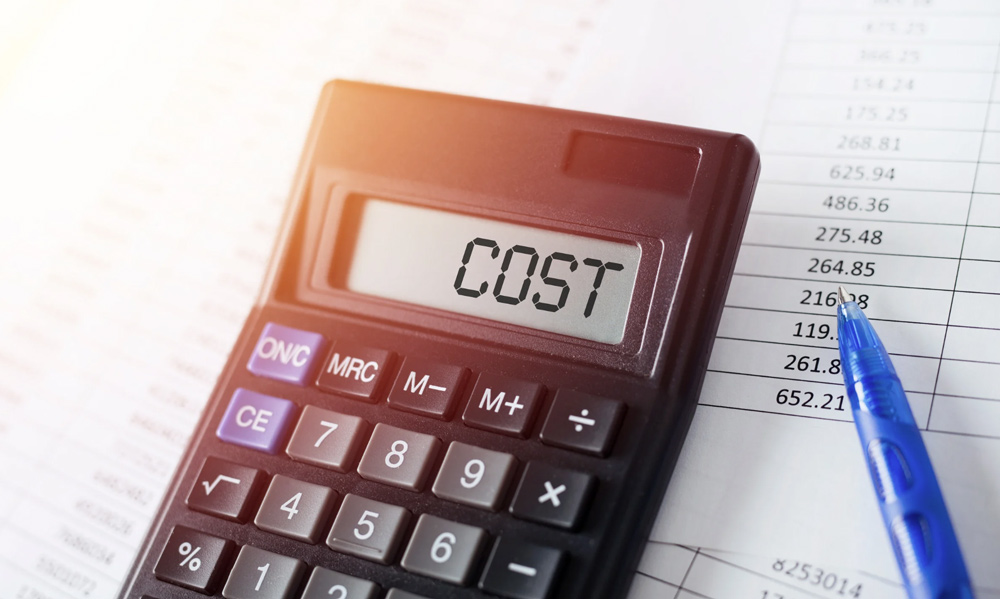
Office leasing cost optimisation is the process of controlling the full budget incurred throughout the lease. It includes base rent, service charges, air-conditioning electricity, parking, office design and fit-out, and reinstatement at the end of the term. The objective is to select an option with a reasonable total cost that meets the actual requirement and limits expenditure outside the plan.
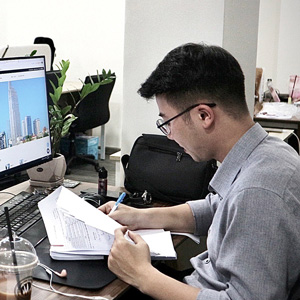
A business should therefore assess area, location, floor efficiency, handover conditions, rent escalation and contractual flexibility together. An effective office option balances cost, functionality, employee experience and the company’s long-term development plan.
2. Formula for calculating the actual total cost of an office
A reliable comparison must include every cost over the lease term. Converting the figures into total occupancy cost and cost per workstation allows the business to compare buildings, office formats and handover conditions on the same basis.
2.1 What costs make up total office occupancy cost?
Total office occupancy cost normally falls into four groups:
- Recurring lease costs: Base rent, service charges, value-added tax and fixed contractual charges.
- Operating costs: Electricity, air-conditioning, water, internet, parking, maintenance and after-hours use.
- Initial investment: Deposit, design, fit-out, furniture, equipment and relocation.
- End-of-term costs: Removal, repairs, cleaning and reinstatement required by the landlord.
A security deposit is cash tied up during the lease and is generally refundable if the tenant meets its contractual obligations. It should still be included in the initial cash-flow plan, even though it is not a final expense when refunded in full.
Review hidden office leasing costs before comparing offers.
2.2 Total office cost formulas
Monthly office cost = Base rent + Service charges + Electricity, water and air-conditioning + Parking + Internet and other amenities + VAT
The source provides the following hypothetical example for a 150 sqm traditional office in central Ho Chi Minh City:
| Cost item | Reference monthly cost |
| Base rent | VND 130,000,000 |
| Building service charge | VND 15,000,000 |
| Electricity, air-conditioning and equipment | VND 12,000,000 |
| Parking | VND 6,000,000 |
| Internet and telephone | VND 3,000,000 |
| Total before tax | VND 166,000,000 |
| VAT on rent and service charges | VND 14,500,000 |
| Actual total monthly cost | VND 180,500,000 |
Full-term cost = Monthly office cost x Number of lease months + Initial investment + Incidental costs + Reinstatement cost – Incentives
Incentives may include rent-free periods, fit-out support or agreed fee reductions. The deposit belongs in initial cash-flow planning but should not be treated as a cost if it is fully refunded at the end of the lease.
3. Eight effective ways to optimise office leasing costs
The budget should be assessed across space, location, building type, handover conditions, lease provisions and operating costs. The lowest quoted rent may still be inefficient when the premises require extensive fit-out, carry high service charges or use space poorly.
3.1 Determine the correct area
Area affects rent, service charges, fit-out, air-conditioning electricity and reinstatement. Calculate the requirement from current headcount, recruitment plans and the functional spaces the business needs. A hybrid business can base workstation numbers on regular office attendance instead of assigning a permanent desk to every employee.
| Occupancy density | Reference area | Characteristics |
| High density | 3-4 sqm/person | Prioritises workstation numbers |
| Standard | 5-6 sqm/person | Balances functionality and cost |
| Spacious | 7-10 sqm/person | Includes more rooms and amenity areas |
Use a practical office size standard when planning workstations and support areas.

3.2 Select a location around business needs
The right location balances rent with the value it creates for operations. Assess five factors:
- Clients: Distance to clients, partners and the company’s main transaction areas.
- Employees: Travel time and commuting convenience for most staff.
- Transport: Connections to major roads, metro, buses and airports.
- Amenities: Banks, restaurants, hotels, administrative services and retail.
- Brand: Whether the office address is consistent with the company’s positioning.
A business that receives few clients may reduce costs by choosing a well-connected location outside the core centre without weakening day-to-day operations.
3.3 Choose the right building Grade and office format
Each building Grade and office format serves a different requirement. The business should avoid paying for a higher specification than it uses or selecting an office model that lacks the flexibility required by its workforce plan.
| Option | Suitable business requirement |
| Grade A office | Premium brand image, technical standards and management |
| Grade B office | A balance between quality and budget |
| Grade C office | Cost priority with limited image requirements |
| Traditional office | Stable workforce, long-term lease and bespoke design |
| Coworking space | Flexible workforce, short projects or hybrid working |
3.4 Compare total cost instead of rent
Put every option into one cost comparison covering recurring rent and service charges, electricity, air-conditioning, internet and parking; design, fit-out, furniture, equipment and moving; escalation, overtime and early-termination charges; and end-of-term removal, repairs and reinstatement. This exposes offices with low quoted rent but high fit-out or operating costs, inefficient floor plates or difficult reinstatement duties.
3.5 Negotiate provisions that create real value
Negotiation should cover the terms that materially affect the total budget, not only the rental rate:
- Rent-free fit-out period: Agree the number of days or months before rent starts.
- Service charges before operation: Request a waiver or reduction during fit-out.
- Fit-out support: Define any landlord contribution or handover work.
- Deposit and payment schedule: Align cash requirements with the implementation plan.
- Escalation: Set the review cycle and increase mechanism clearly.
- Expansion and renewal: Record renewal and priority rights for additional space.
- Flexibility: Where available, negotiate conversion, contraction or early termination rights.
Every incentive should appear in the offer letter and lease so the negotiated commercial value is enforceable.

See also: how to negotiate an office lease.
3.6 Reuse the existing condition to reduce fit-out costs
An office with usable ceilings, floors, lighting, meeting rooms or furniture can shorten preparation time and reduce upfront investment. Inspect the existing condition, functional suitability and the capacity to modify electricity, air-conditioning and fire safety systems. Confirm which assets are included, who maintains them and what must be reinstated at lease expiry.
A regular floor plate with few columns, an efficient core and an existing layout close to the requirement generally creates better value than a cheaper but inefficient shell.
Understand the scope and timing of an office fit-out before accepting the premises.
3.7 Control operating costs throughout the lease
Track electricity, air-conditioning, parking, internet, maintenance and overtime charges regularly. Ask the building for the complete fee schedule and calculation method during the inspection, then compare monthly invoices with the agreed basis and investigate abnormal increases.
3.8 Optimise workplace operation and resources
Review workstation, meeting-room, common-area and equipment utilisation. Shared seating, layout changes, converting underused areas, zoning lighting and air-conditioning, using natural light and switching off equipment in vacant zones can reduce operating costs. Utilisation data also supports decisions to expand, contract or renew.

4. Mistakes that increase office leasing costs
- Comparing quoted rent only: Ignoring service charges, air-conditioning electricity, parking, internet, overtime and other operating costs understates the real budget.
- Leasing more area than required: Surplus space increases rent, management fees, fit-out, energy use and reinstatement obligations at the same time.
- Choosing the wrong Grade or office format: A specification above the requirement or a model with insufficient flexibility makes the company pay for facilities it rarely uses.
- Ignoring chargeable area and floor efficiency: Columns, difficult floor shapes and a high common-area loading reduce the space available for actual work.
- Under-budgeting design, fit-out and reinstatement: A low-rent office can become expensive when extensive work or strict reinstatement is required.
- Negotiating rent alone: The tenant may lose rent-free time, service-charge reductions, fit-out support, escalation caps and space-adjustment rights.
- Failing to plan for workforce changes: A long lease without expansion, contraction or break options can become costly when the business plan changes.
- Not monitoring costs during occupation: Unchecked invoices, overtime fees and poor space utilisation allow unnecessary costs to continue.

5. How Maison Office supports office cost optimisation
Maison Office states that it has more than 10 years of office market advisory experience. It helps businesses determine an appropriate area, select a location, building Grade and office format within the actual budget, and compare options on total occupancy cost, including rent, service charges, handover condition, operating expenses and future expansion capacity.
Support covers requirement analysis, screening buildings, comparing total cost, arranging inspections, negotiating rent-free periods, deposits, escalation and other commercial provisions, and coordinating office design and fit-out around the approved budget.

Contact Maison Office for a suitable office shortlist, updated quotations, inspection support and fit-out planning advice.
6. Frequently asked questions about office cost optimisation
6.1 How can a business reduce office leasing costs?
Start with the correct area, location and building Grade, then compare total cost rather than rent alone. Negotiate rent-free time, service charges, escalation and handover conditions, and control operating costs throughout the lease.
6.2 How much office space should be allowed per employee?
The source uses a range of 3-10 sqm per person. High-density offices use about 3-4 sqm, standard offices 5-6 sqm, and spacious offices with more meeting and amenity areas 7-10 sqm per person.
6.3 Is a serviced office cheaper than a traditional office?
A serviced office often suits small businesses, representative offices or changing teams because upfront investment is low and many services are included. A traditional office may be more efficient for a stable business with a long lease and a need for bespoke branding.
6.4 Which office costs can be negotiated?
Rent, rent-free periods, service charges during fit-out, deposit, payment schedule, escalation and landlord fit-out support may be negotiable. Renewal, expansion, contraction and early termination rights should also be discussed.
6.5 How should two office options be compared?
Put rent, service charges, air-conditioning electricity, parking, internet, fit-out, furniture and reinstatement into one full-term budget. Compare the total financial result rather than only the rate per sqm.
Editor and content team manager at Maison Office.
With over 5 years of experience in consulting and extensive content editing in the real estate services and interior design field. Sharing valuable information with customers, partners, and attracting millions of views.


