Việt Nam
 English
 中文
中文

HCMC International Financial Centre: Planning & Development Orientation

 9 min read
574
9 min read
574
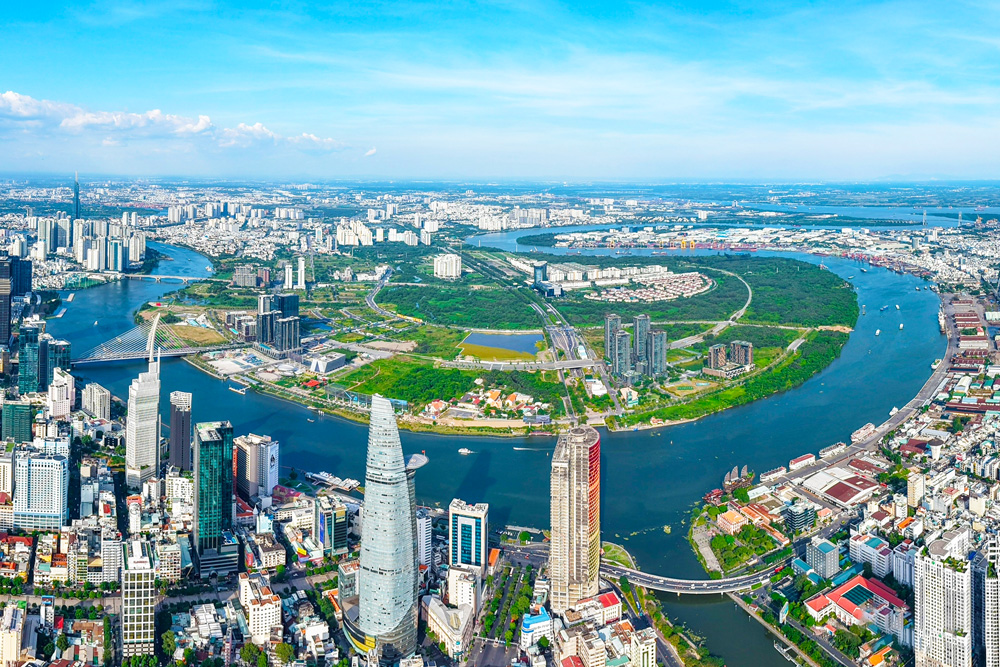
The Ho Chi Minh City International Financial Centre is planned across approximately 898 hectares, covering Sai Gon Ward, Ben Thanh Ward and the Thu Thiem New Urban Area in An Khanh Ward. The centre is envisioned as a gateway for international capital flows, attracting major financial institutions and creating new momentum for Ho Chi Minh City’s office leasing market.
>> View the latest listings for office space for lease in Ho Chi Minh City and office space for lease in Hanoi, with updated rental rates, available areas and building amenities.
Table of Contents
- 1. Key Characteristics of the HCMC International Financial Centre
- 2. Boundaries of the HCMC International Financial Centre
- 3. Key Planning and Development Priorities
- 4. Trade and Connectivity Advantages of HCMC New Financial Centre
- 5. Office Buildings within the HCMC International Financial Centre
- 6. Impact of the Financial Centre on Office Rents and Supply
- 7. Frequently Asked Questions
1. Key Characteristics of the HCMC International Financial Centre
The Vietnam International Financial Centre in Ho Chi Minh City (VIFC-HCMC) was officially launched in February 2026 pursuant to National Assembly Resolution No. 222/2025/QH15. It is positioned as a strategic hub connecting global capital with Vietnam’s development needs, while attracting investment banks, investment funds, asset management firms, fintech companies and international financial institutions.
The VIFC-HCMC ecosystem focuses on four specialised areas:
- Aviation Finance Centre: Provides financing for aircraft purchases, leasing and lessor activities, together with aviation insurance, aviation logistics finance and transport-related derivatives.
- FinTech Centre: Develops cross-border payments, blockchain applications, AI-powered financial services, digital assets and next-generation financial models within a regulatory sandbox.
- Maritime Finance Centre: Focuses on trade finance, ship financing, marine insurance, logistics and global supply chain services.
- International Interbank Network and Global Financial Institutions: Connects banks, financial institutions, payment systems and cross-border capital flows, while exploring blockchain, smart contracts and new digital payment models.
With this multi-sector structure, VIFC-HCMC is designed to establish a modern financial ecosystem linking finance with trade, technology, aviation, maritime services and logistics. This foundation is expected to strengthen Ho Chi Minh City’s capacity to attract international capital and expand its role within the regional financial network.
2. Boundaries of the HCMC International Financial Centre
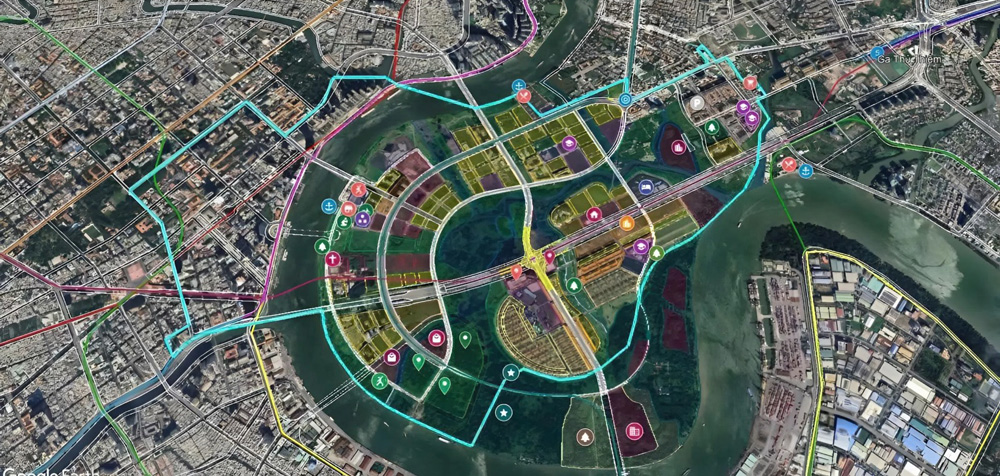
Pursuant to Decree No. 323/2025/ND-CP, the Ho Chi Minh City International Financial Centre covers approximately 898 hectares across Sai Gon Ward, Ben Thanh Ward and the Thu Thiem New Urban Area in An Khanh Ward.
Boundary Area
The centre is bounded by Vo Van Kiet Boulevard, Pho Duc Chinh Street, Nguyen Cong Tru Street, Nam Ky Khoi Nghia Street, Le Duan Boulevard, Ton Duc Thang Street, Nguyen Huu Canh Street, the Nhieu Loc–Thi Nghe Canal, the Saigon River, the boundary of Lan Anh Villa Compound, Tran Bach Dang Street, Tran Nao Street, the northern and northeastern boundaries of the Thu Thiem New Urban Area, Road No. 7 and Ca Tre Creek.
This location links Ho Chi Minh City’s established financial district with the emerging commercial and office hub in Thu Thiem, creating a large-scale financial services zone at the heart of the city.
Authority Responsible for Boundary and Land Allocation
The HCMC People’s Committee is responsible for defining the centre’s detailed location, administrative boundaries, total area and allocated land fund. The VIFC-HCMC governing authority is responsible for publishing this information through the centre’s electronic one-stop administrative system.
Functional Zones
The HCMC International Financial Centre is expected to include the following key functional areas:
- Financial Trading Zone: Dedicated to financial transactions and related activities.
- Banking Services Zone: Accommodating banks and other financial institutions.
- Exchange Zone: Including securities, commodities and related trading platforms.
- Office Zone: Providing workspace for members, investors and organisations operating within the centre.
- Arbitration and Court Zone: Supporting dispute resolution and legal proceedings.
- Other Functional Zones: To be determined by the governing authority based on operational requirements.
The land allocated to the centre must comply with approved regional and municipal planning, with clearly defined boundaries, convenient transport access and sufficient capacity for infrastructure and essential services. The site must also meet requirements relating to environmental protection, links with high-quality education and research institutions, national defence and security.
3. Key Planning and Development Priorities
VIFC-HCMC is planned as a modern financial ecosystem built on a transparent regulatory environment, flexible operating mechanisms and direct connections between international capital and the real economy. Priority areas include infrastructure, logistics, digital transformation and sustainable development.
During implementation, Ho Chi Minh City will focus on refining special mechanisms for foreign exchange, taxation, investment, the FinTech regulatory sandbox and international-standard dispute resolution. The city will also develop data infrastructure, financial technology, cross-border payment systems and a highly skilled workforce.
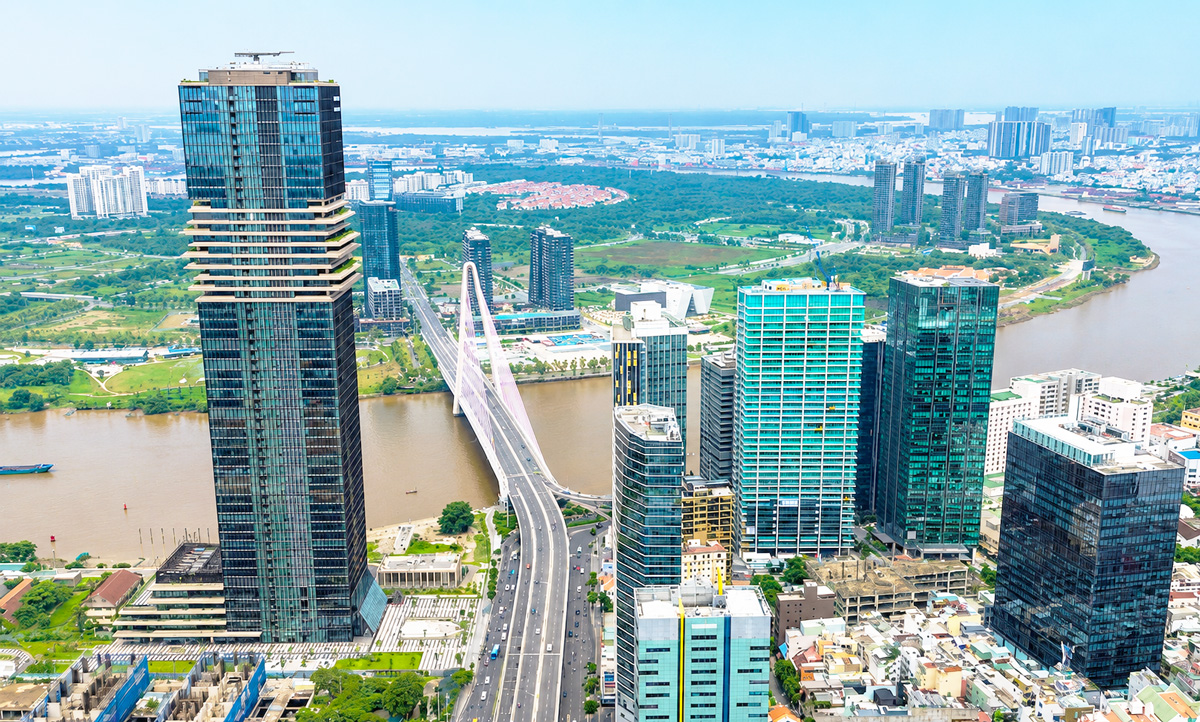
VIFC-HCMC is expected to serve as a major capital-raising hub for strategic projects, as Vietnam requires an estimated USD 1.5–1.6 trillion in investment capital during 2026–2035, while Ho Chi Minh City alone will need more than VND 3.2 quadrillion between 2026 and 2030. This provides a strong foundation for the city to enhance its competitiveness and strengthen its position within the regional financial landscape.
4. Trade and Connectivity Advantages of HCMC New Financial Centre
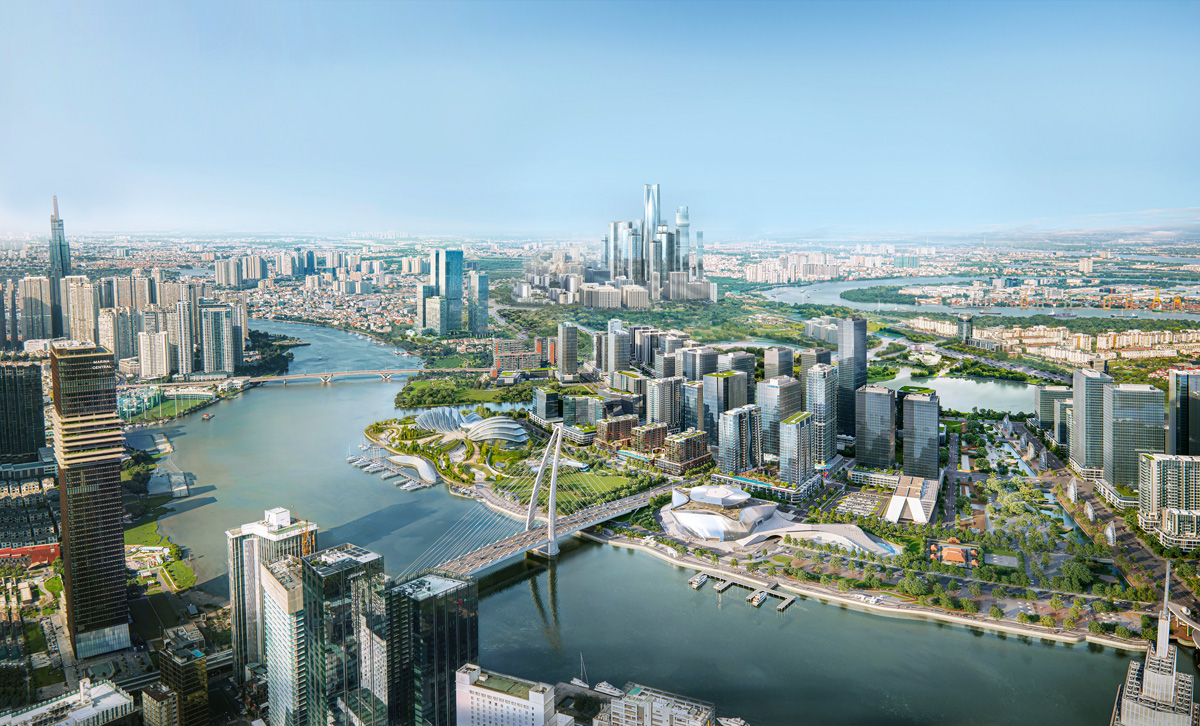
VIFC-HCMC is strategically positioned between the established city centre in Sai Gon Ward and Ben Thanh Ward, and the Thu Thiem New Urban Area in An Khanh Ward. This location provides direct access to Ho Chi Minh City’s banking, commercial, office, port and key transport infrastructure.
- Urban connectivity: Vo Van Kiet Boulevard, Ton Duc Thang Street, Nguyen Huu Canh Street, Mai Chi Tho Boulevard and Metro Line No. 1 provide efficient links between the city centre, Thu Thiem and eastern Ho Chi Minh City.
- Air connectivity: VIFC-HCMC offers convenient access to Tan Son Nhat International Airport and major transport routes leading to Long Thanh International Airport, which is targeted to commence commercial operations by the end of 2026.
- Port and logistics connectivity: Its proximity to the Saigon River and eastern port network supports the development of trade finance, marine insurance, ship financing and supply chain services.
- International capital connectivity: The interbank system is designed to connect global financial institutions, facilitate cross-border payments and support the application of blockchain and smart contracts within the regulatory sandbox.
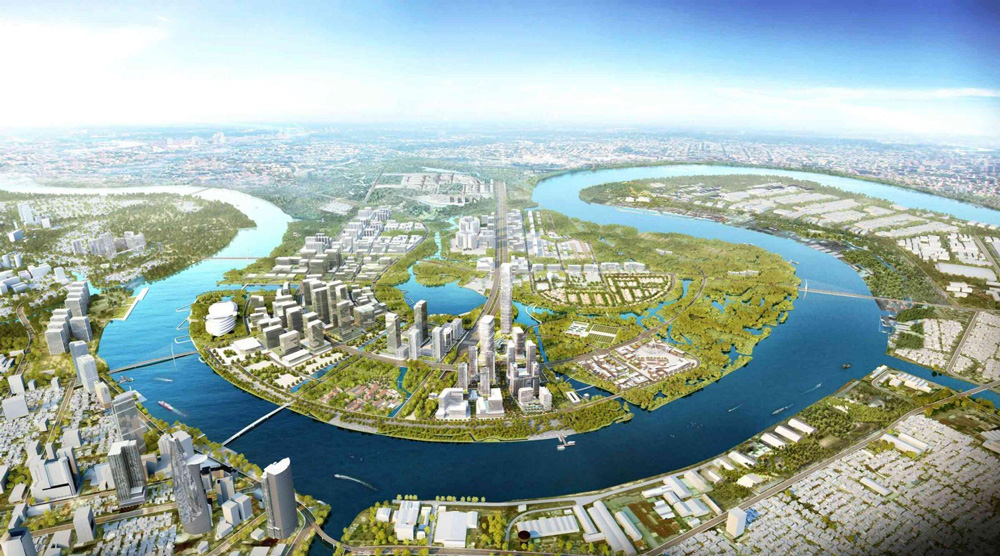
With its integrated transport, logistics and financial infrastructure, VIFC-HCMC is well positioned to attract banks, investment funds, insurance companies, fintech firms and professional service providers seeking office space in HCMC.
5. Office Buildings within the HCMC International Financial Centre
The development of the Ho Chi Minh City International Financial Centre is closely linked to the city’s existing office building stock and upcoming projects. District 1 and the Thu Thiem New Urban Area will serve as two complementary core locations, meeting current occupier demand while providing additional capacity for future growth.
5.1 Office Buildings in District 1 – The Established Financial Core
District 1 has long been regarded as Ho Chi Minh City’s “Wall Street”, with a high concentration of Grade A and Grade A+ office buildings. The area hosts the headquarters of banks, investment funds, securities firms and major financial services companies. Several landmark buildings have become established symbols of the city’s financial district, including:
| Building Name | Address | Grade |
| Saigon Marina IFC | 02 Ton Duc Thang, Sai Gon Ward, (District 1) HCMC | Grade A+ |
| Deutsches Haus | 33 Le Duan, Sai Gon Ward, (District 1) HCMC | Grade A |
| Vietcombank Tower | 05 Cong Truong Me Linh, Sai Gon Ward, (District 1) HCMC | Grade A |
| Me Linh Point Tower | 02 Ngo Duc Ke, Sai Gon Ward, (District 1) HCMC | Grade A |
| Saigon Times Square | 22 – 36 Nguyen Hue, Sai Gon Ward, (District 1) HCMC | Grade A |
| The Nexus | 3A – 3B Ton Duc Thang, Sai Gon Ward, (District 1) HCMC | Grade A |
| mPlaza Saigon | 39 Le Duan, Sai Gon Ward, (District 1) HCMC | Grade A |
| Sonatus Building | 15 Le Thanh Ton, Sai Gon Ward, (District 1) HCMC | Grade A |
| Friendship Tower | 31 Le Duan, Sai Gon Ward, (District 1) HCMC | Grade A |
| Vincom Center Tower | 72 Le Thanh Ton, Sai Gon Ward, (District 1) HCMC | Grade A |
| Sunwah Tower | 115 Nguyen Hue, Sai Gon Ward, (District 1) HCMC | Grade A |
| Saigon Centre 2 | 92 – 94 Nam Ky Khoi Nghia, Sai Gon Ward, (District 1) HCMC | Grade A |
| Saigon Centre Tower 1 | 65 Le Loi, Sai Gon Ward, (District 1) HCMC | Grade A |
| Riverfront Financial Centre | 3A – 3B Ton Duc Thang, Sai Gon Ward, (District 1) HCMC | Grade A |
| Bitexco Financial Tower | 02 Hai Trieu, Sai Gon Ward, (District 1) HCMC | Grade A |
| Techcombank Saigon Tower | 23 Le Duan, Sai Gon Ward, (District 1) HCMC | Grade A |
| Saigon Tower | 29 Le Duan, Sai Gon Ward, (District 1) HCMC | Grade A |
| 9 Ton Duc Thang Tower | 09-11 Ton Duc Thang, Sai Gon Ward, (District 1) HCMC | Grade B |
| The Waterfront Saigon | 1-1A-2 Ton Duc Thang, Sai Gon Ward, (District 1) HCMC | Grade B |
| Riverbank Place | 3C Ton Duc Thang, Sai Gon Ward, (District 1) HCMC | Grade B |
>> Office for lease in District 1
5.2 Office Buildings in Thu Thiem – The Emerging Financial Core
Unlike District 1, Thu Thiem in Thu Duc City is planned as a next-generation financial centre. The area benefits from a large land bank and integrated master planning, making it suitable for high-rise developments and international mixed-use complexes. In the coming years, a number of Grade A+ office buildings in Thu Thiem are expected to become operational and serve as headquarters for financial institutions, fintech companies and global corporations. Key office leasing projects in the Thu Thiem New Urban Area include:
| Building Name | Address | Grade |
| The Hallmark | 15 Tran Bach Dang, An Khanh Ward, (Thu Duc City) HCMC | Grade A |
| The METT | 15 Tran Bach Dang, An Khanh Ward, (Thu Duc City) HCMC | Grade A |
| Thisofic Tower | 10 Mai Chi Tho, An Khanh Ward, (District 2) HCMC | Grade A |
| The Galleria Residence | 20 Nguyen Thien Thanh, An Khanh Ward, (District 2) HCMC | Grade A |
| The Crest Office | Lot 1.13, Thu Thiem New Urban Area, An Khanh Ward, (District 2) HCMC | Grade B+ |
| The Opera Residence | 05 D6 Street, An Khanh Ward, (District 2), HCMC | Grade B |
| Empire City | 08 Nguyen Thien Thanh, An Khanh Ward, (District 2) HCMC | Grade B |
With over 10 years of experience and a portfolio of more than 1,800 Grade A, B and C office buildings in Ho Chi Minh City, Maison Office is a trusted advisory firm helping businesses quickly identify office space that meets their requirements and budget.
6. Impact of the Financial Centre on Office Rents and Supply
6.1 Impact on Office Rents and Supply
The establishment of the Ho Chi Minh City International Financial Centre is expected to have a direct impact on the office leasing market, particularly in District 1 and Thu Thiem.
- Stronger office demand: As international banks, securities firms, investment funds, insurance groups and fintech companies establish a presence in the financial core, demand for Grade A and Grade A+ office space is expected to rise significantly.
- Upward pressure on rents: Experience from regional financial centres indicates that office rents in financial districts are often 15–25% higher than the wider market. With Grade A office rents in District 1 currently ranging from approximately USD 55–70/m²/month, rental levels may continue to increase if demand exceeds supply.
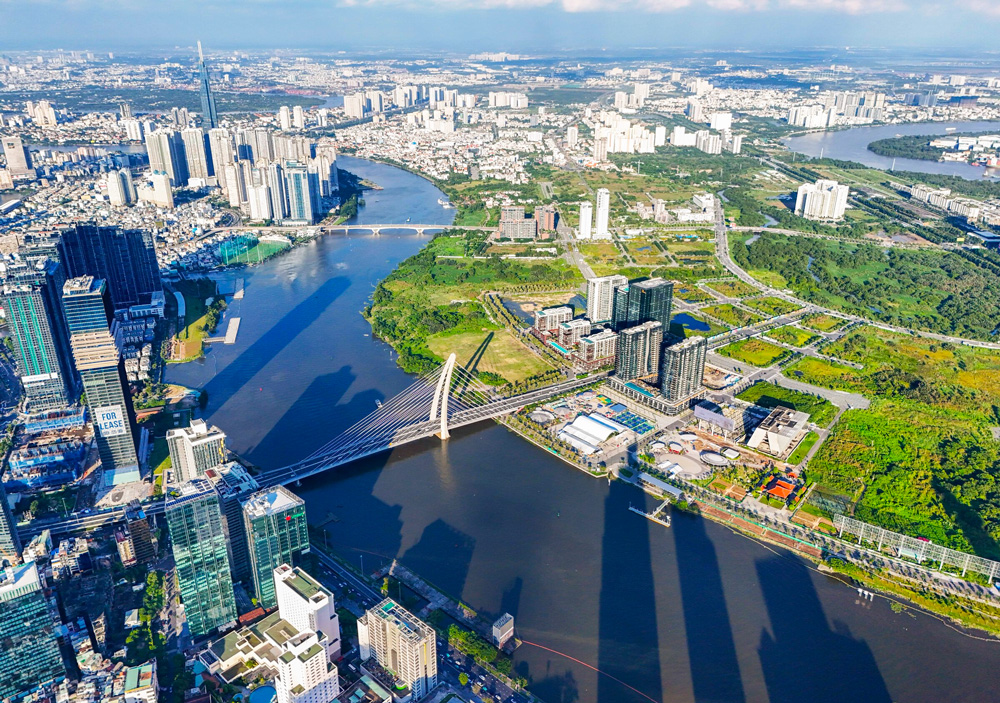
- Additional supply from Thu Thiem: Unlike District 1, where developable land is limited, Thu Thiem has substantial land allocated for Grade A+ office projects. Over the next 10–15 years, new developments are expected to add hundreds of thousands of square metres of office space, helping balance supply and demand while expanding occupier choice.
- A shift in market structure: District 1 will retain its role as the established financial core, while Thu Thiem will serve as a complementary source of modern, competitive office supply. Together, the two areas are expected to form a dual financial and office ecosystem similar to Hong Kong–Kowloon or Seoul–Yeouido.
6.2 Opportunities and Challenges for Businesses
In the future, the Ho Chi Minh City International Financial Centre is expected to create significant opportunities, together with a number of challenges for businesses operating in the area.
Opportunities for businesses:
- Stronger international connectivity: Domestic and foreign companies will gain more direct access to global financial institutions, investment funds and international capital markets.
- Enhanced brand positioning: Establishing an office within the financial centre can strengthen corporate credibility and support a more professional image among clients and business partners.
- Benefits from modern infrastructure: District 1 and Thu Thiem are expected to benefit from coordinated investment in transport, urban amenities and business support services, creating a modern, smart and sustainable working environment.
- Market expansion potential: Financial services, insurance, fintech, international trade and logistics companies will have greater opportunities for growth.
Challenges for businesses:
- Higher occupancy costs: Grade A and Grade A+ office rents within the financial core may increase significantly, creating cost pressure for small and medium-sized enterprises.
- Stronger competition: The concentration of multinational corporations and major institutions will intensify competition for premium office space and supporting services.
- International compliance requirements: Businesses will need to meet higher standards of governance, financial transparency and legal compliance, particularly when working with global institutions.
- Pressure to modernise operations: Companies may need to invest further in technology, digital management and sustainable business practices to remain competitive in an international financial environment.
Overall, the HCMC International Financial Centre will create a high-potential business environment, while requiring companies to adopt flexible strategies, strengthen financial capacity and improve corporate governance.
7. Frequently Asked Questions
7.1 Where is the core area of the HCMC International Financial Centre located?
Pursuant to Decree No. 323/2025/ND-CP, the Ho Chi Minh City International Financial Centre covers approximately 898 hectares across Sai Gon Ward, Ben Thanh Ward and the Thu Thiem New Urban Area in An Khanh Ward.
7.2 What is the estimated investment capital for the new financial centre?
According to published information, VIFC-HCMC has recorded approximately USD 9.1 billion in registered capital, with more than 500 companies registering to become members. This figure represents capital registered within the ecosystem and should not be interpreted as total infrastructure investment or disbursed capital.
7.3 When will the first phase of the HCMC International Financial Centre be completed?
The Vietnam International Financial Centre was established under Decree No. 323/2025/ND-CP dated 18 December 2025 and operates as a unified entity across Ho Chi Minh City and Da Nang. VIFC-HCMC was officially launched in February 2026 and is currently developing its operating framework, data infrastructure, member network and international workforce training programmes.