

 Việt Nam
 English

What is Coworking Space? Pros, Cons & Leasing Tips

 7 min read
1.2K
7 min read
1.2K
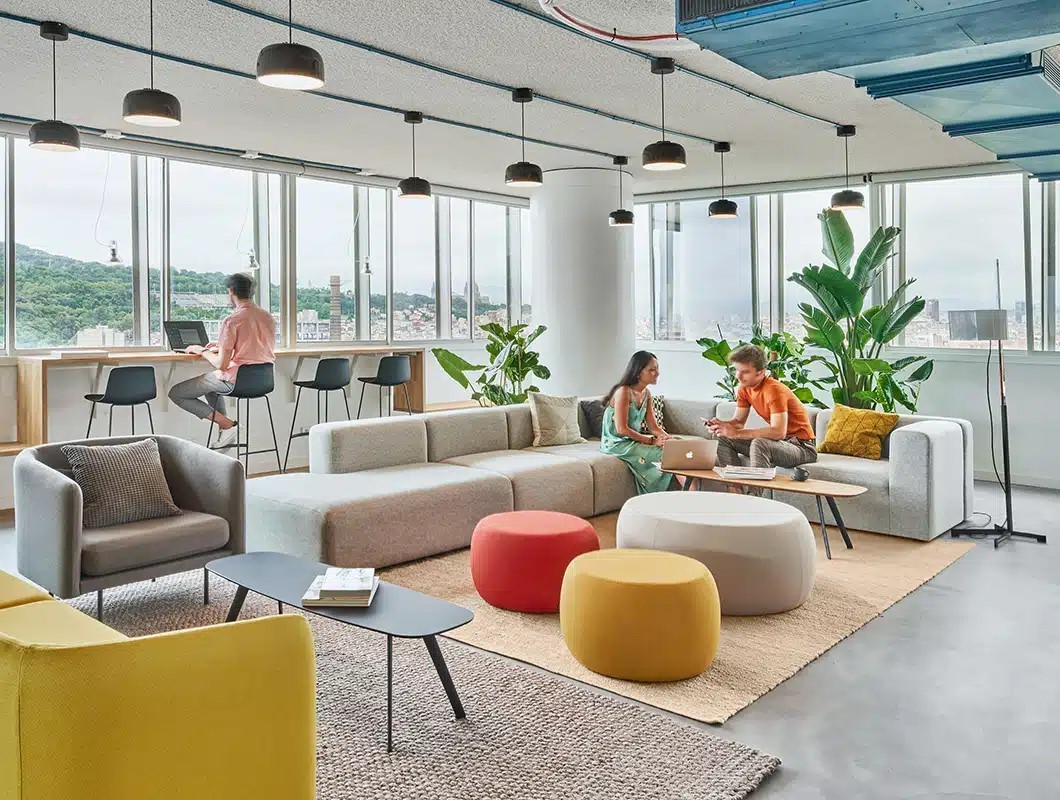
In the commercial real estate landscape, the emergence of coworking spaces has marked a notable shift, reflecting the growing demand for flexible and cost-efficient workspaces. Coworking space, or shared workspace, is not only a smart financial solution for small businesses, freelancers, and startups, but also an opportunity to expand networks and foster creativity through a diverse, collaborative working environment.
Table of Contents
- 1. What is Coworking Space?
- 2. Current Types of Coworking Office Space Models
- 3. Benefits of Coworking Space
- 4. Advantages and Disadvantages of Coworking Space
- 5. Who is Coworking Space Suitable For?
- 6. Comparison Between Coworking Space and Traditional Office
- 7. Key Considerations When Leasing a Coworking Space
- 8. Frequently Asked Questions About Coworking Space
1. What is Coworking Space?
Coworking space is a shared workspace model where individuals and businesses can lease workspace by the hour, day, or month.
The distinctive value of coworking space lies not only in providing a shared working environment, but also in creating opportunities for networking, knowledge sharing, and collaboration among members, thereby opening up new business and creative opportunities.
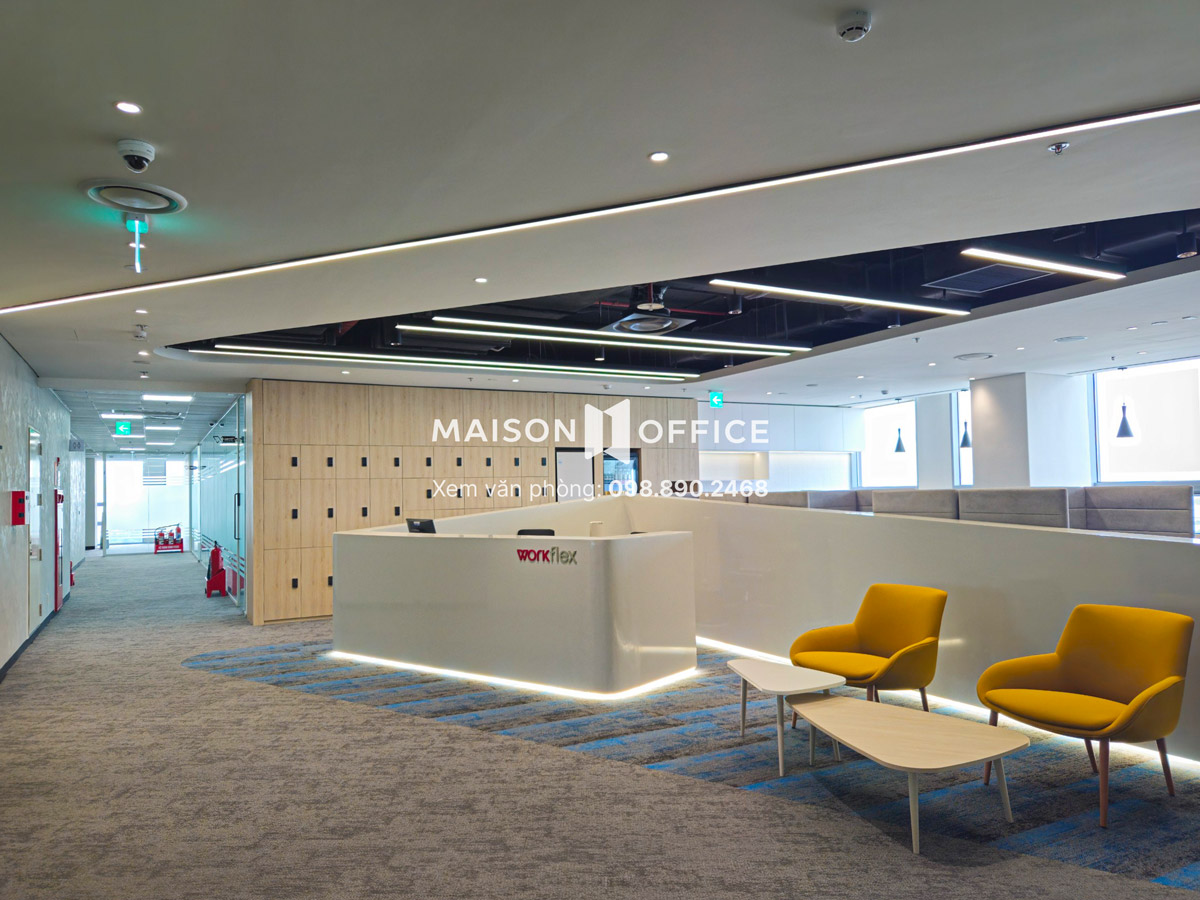
Coworking spaces are typically fully equipped with individual workstations, meeting rooms, group discussion areas, and amenities such as high-speed Wi-Fi, printers, and coffee bars. Some shared workspaces also provide support services such as legal consulting, accounting, and event management to meet the diverse needs of their members.
2. Current Types of Coworking Office Space Models
Today, there are various coworking office space models, which can be classified as follows:
2.1 Dedicated Desk
- Features: Tenants have a fixed workstation that remains unchanged throughout the lease period.
- Suitable for: Small and medium-sized enterprises, startup teams, and foreign companies looking to open a branch or representative office in Vietnam.
- Advantages: More cost-effective than leasing a traditional office. It also helps foreign companies address legal requirements and reduce unnecessary costs.
2.2 Flexible Desk
- Features: Tenants do not have a fixed seat and can choose any available workstation within the coworking space each day.
- Suitable for: Freelancers, independent professionals, and solo entrepreneurs.
- Advantages: Convenient, flexible, and cost-efficient. This option is suitable for those who do not need a fixed office on a regular basis.
These coworking office space models meet the diverse needs of users, from small businesses and startups to freelancers and independent entrepreneurs, providing a convenient and cost-efficient working environment.
3. Benefits of Coworking Space
Coworking space offers many benefits for both businesses and individuals, including:
- Flexibility and cost savings
- Community network building
- Creativity stimulation
- Professional brand image
3.1 Flexibility and Cost Savings
Coworking space allows individuals and businesses to significantly reduce the costs of leasing and managing a traditional office, while providing flexibility in choosing the workspace and working schedule that best suit their needs.
3.2 Community Network Building
The coworking space environment creates opportunities for business networking and professional interaction, helping expand opportunities and strengthen collaboration among individuals and businesses.
3.3 Creativity Stimulation
Working in a space with diverse industries and cultures helps stimulate creativity and innovation, especially when members share their knowledge and experience with one another.

3.4 Building a Professional Image
With an excellent business address, well-organized customer services and information systems, and a professionally designed office, your business image will certainly become more professional. In the eyes of partners and clients, your company can still operate in a professional manner. In fact, using shared office services also reflects a professional approach to business operations.
4. Advantages and Disadvantages of Coworking Space
Whether you are a new freelancer, the founder of a unicorn startup, or the owner of an established business, you may have considered choosing a coworking space as your company’s headquarters. However, behind the appealing image of an open, dynamic, and flexible workspace, there are certain limitations that may not be immediately visible during your first or second visit.
To help business owners better understand this relatively new office model, we provide an overview of the advantages of coworking space and the potential limitations of working in this open-plan environment.
4.1 Advantages
- Flexibility: Coworking spaces allow business owners to choose flexible leasing packages, with monthly rental rates and various options in terms of office size and working area.
- Ready-to-use modern facilities: Coworking spaces provide modern office equipment such as computers, printers, and other facilities, helping businesses reduce initial investment costs.
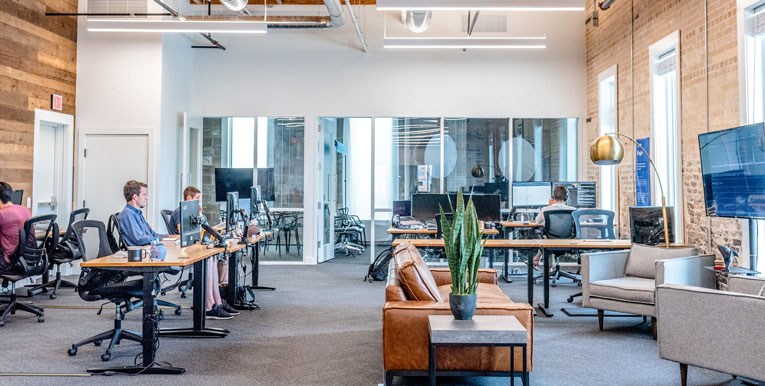
- Collaborative working environment: The open and dynamic setting of a coworking space creates opportunities for members to expand their network and collaborate more effectively.
- No maintenance or repair costs: The building owner is responsible for maintenance and repair works, allowing businesses to focus on their core operations.
- Valuable learning opportunities: Coworking spaces often organize seminars and workshops, giving members opportunities to enhance their knowledge and skills.
In summary, coworking space offers businesses many benefits in terms of flexibility, facilities, working environment, operating costs, and learning opportunities.
4.2 Disadvantages
- Privacy between companies: Working in the same space with multiple businesses may affect a company’s privacy and the efficiency of internal communication.
- Lack of concentration: Different businesses may have different working schedules, which can cause employees to lose focus. In addition, shared working hours are often fixed from 8:00 AM to 5:00 PM, which may not be suitable for some companies that need to work overtime.
Although there are still a few limitations, coworking space is undeniably a suitable model for small and medium-sized enterprises, both in terms of financial efficiency and flexible, open workspace solutions.
5. Who is Coworking Space Suitable For?
Although coworking space offers many benefits for tenants, shared workspace cannot completely replace traditional office space. So, who is coworking space suitable for?
- Small and medium-sized enterprises that want to save costs, optimize staffing, and make effective use of available resources and facilities.
- Directors or employees who do not work directly at their company’s main office due to frequent business travel, working far from home, or expanding into markets in other provinces and cities.
- Individuals who are preparing to establish or have recently established a business.
- Consultants or project teams operating independently.
- Foreign companies exploring the market or setting up a representative office in Vietnam and needing a suitable space for a small number of employees.
- Freelancers working in technology-related fields, including freelancers, MMO professionals, SEO specialists, and online marketers.

6. Comparison Between Coworking Space and Traditional Office
Although coworking space is still a relatively new model, it has significantly changed the way employees work and interact in the workplace.
While coworking space is suitable for freelancers, startups, and small to medium-sized enterprises, the traditional office model is generally more suitable for large enterprises and corporations.
| Criteria | Coworking Space | Traditional Office |
| Cost | Lower, with flexible payment terms | Higher, with long-term contracts |
| Flexibility | High, available by the hour, day, or month | Low, usually leased on a yearly basis |
| Ownership | No ownership | The business owns or leases the space long-term |
| Design and decoration | Already designed and furnished, usually updated regularly | The business designs and decorates the space according to its own preferences |
| Amenities and services | Shared amenities such as Wi-Fi, printers, and café areas are usually included in the rental fee | The business installs and pays for these amenities itself |
| Privacy | Lower than a traditional office | High, with the ability to customize the workspace |
| Location | Usually located in central areas or near residential neighborhoods | Depends on the business’s choice |
7. Key Considerations When Leasing a Coworking Space
When leasing a coworking space, businesses should take note of the following factors:
Location and amenities:
- Choose a convenient location near the city center and essential amenities such as transportation, dining, and entertainment.
- Check available facilities such as Wi-Fi, meeting rooms, common areas, parking, and other supporting amenities.
Workspace and privacy:
- Evaluate the working environment, noise level, and degree of privacy.
- Consider your need for private space, meeting rooms, or a private office.
Pricing and additional fees:
- Understand the service packages and costs clearly, including any hidden fees.
- Negotiate flexible terms regarding lease duration and payment conditions.
Community and activities:
- Learn about the member community, as well as activities and events organized within the coworking space.
- Assess whether the community and activities align with your needs and goals.
Contract and policies:
- Carefully review the contract and policies related to space usage, confidentiality, and contract termination.
- Make sure the terms are suitable for your requirements.
Carefully evaluating these factors will help you choose the most suitable coworking space.
Coworking space, with its key advantages in flexibility, cost efficiency, and community connectivity, is increasingly becoming a popular choice for freelancers, startups, small businesses, as well as larger companies seeking a multifunctional workspace. This model not only meets the demand for a professional working environment, but also opens up opportunities for collaboration and networking, thereby fostering creativity and innovation. As the labor market continues to evolve and demand for workplace flexibility increases, coworking space is expected to remain an essential part of the future work structure.
8. Frequently Asked Questions About Coworking Space
8.1 What types of businesses is coworking space suitable for?
Coworking space is an ideal choice for small and medium-sized enterprises, freelancers, startups, and companies that need flexibility in leasing office space without committing to a long-term contract. In addition, international businesses looking to open a representative office in Vietnam can also use coworking space to reduce costs and optimize setup time.
8.2 What types of coworking space are available?
Common coworking space models include:
- Dedicated desk: Tenants have their own fixed workstation.
- Flexible desk: Tenants can choose any available seat in the shared workspace.
- Private office: A separate workspace for a business or team.
8.3 Is coworking space more cost-effective than a traditional office?
Yes. Coworking space helps businesses reduce costs by allowing them to pay only for the space they use, without having to invest in facilities, maintenance services, or operating costs. Amenities such as Wi-Fi, printers, and meeting rooms are already included in the rental package.
8.4 Can coworking space help businesses grow and connect with a wider community?
Yes. The coworking space environment encourages interaction and collaboration between businesses and individuals, helping build a broader business network. Many coworking spaces also organize events, workshops, and networking activities, creating opportunities for collaboration and business expansion.
8.5 Does coworking space ensure privacy?
Although coworking space is primarily a shared working environment, private meeting rooms, private offices, and separate areas can be used when needed. However, businesses that require a fully private workspace should carefully consider privacy-related factors before making a decision.
Editor and content team manager at Maison Office.
With over 5 years of experience in consulting and extensive content editing in the real estate services and interior design field. Sharing valuable information with customers, partners, and attracting millions of views.


