

 Việt Nam
 English

What is a Green Office? Advantages, Disadvantages, and Design Trends
 9 min read
1.2K
9 min read
1.2K
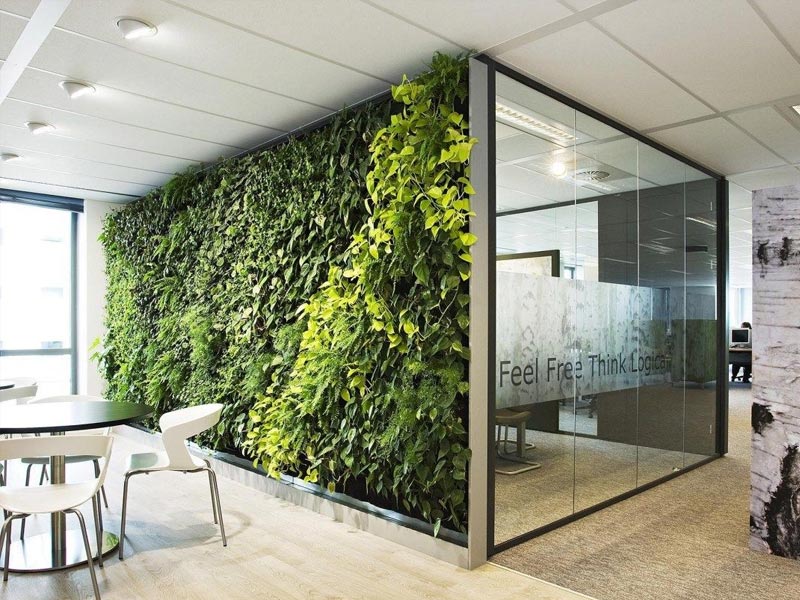
In recent years, green offices have attracted growing interest from many businesses. A workplace filled with greenery and designed with environmental friendliness in mind can become a key advantage in helping companies attract talent and improve employee satisfaction.
Table of Contents
- 1. What is a Green Office?
- 2. What are the characteristics of Green Office?
- 3. How to Operate a Green Office
- 4. Examples of Green Offices
- 5. Green Offices Can Increase Work Productivity by 15%
- 6. Frequently Asked Questions About Green Offices
- 6.1 How is a green office different from a traditional office?
- 6.2 Is a green office certification mandatory for businesses?
- 6.3 Which organization introduced the Green Office standard?
- 6.4 Can small businesses apply the green office model?
- 6.5 Is there any data proving the effectiveness of green offices?
1. What is a Green Office?
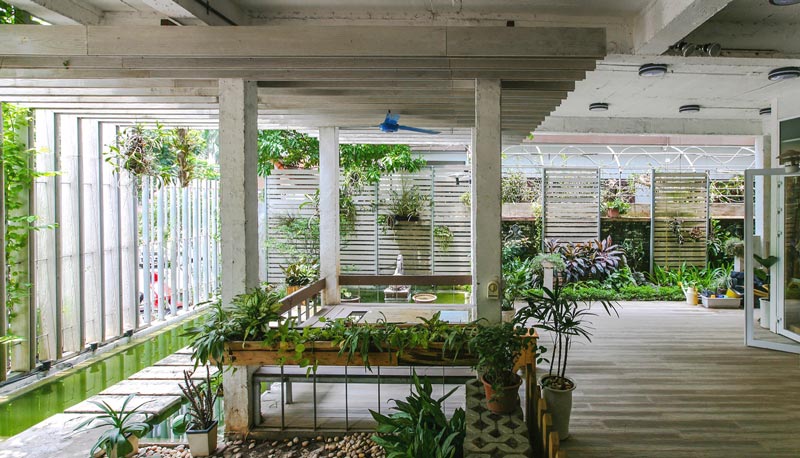
A green office is a workplace model designed and managed in an optimized way to promote sustainability and environmental friendliness. This model focuses on minimizing negative impacts on the surrounding environment while creating a healthier, more comfortable, and more professional working space for employees.
Today, to support businesses in developing and designing green offices and creating environmentally friendly workplaces, the World Wide Fund for Nature (WWF) introduced the WWF Green Office environmental management system in 2002.
This system serves as a standard that businesses can use to establish their own green workplace model.
Green Office is suitable for all types of businesses, from small companies to large corporations, and from private enterprises to government organizations.
Within this system, WWF sets out standards that businesses can use to assess the effectiveness of their efforts to reduce CO₂ emissions. More broadly, Green Office serves as a stepping stone for employees to change their behavior and contribute to a more sustainable future.
2. What are the characteristics of Green Office?
When businesses apply the green office model to their workplace, they can gain the following specific benefits:
- Reducing CO₂ emissions into the environment and minimizing the company’s impact on the surrounding environment.
For example, WWF’s office in Finland reduced more than 12,400 tons of CO₂ emissions from 2007 to 2021. This amount of emissions is equivalent to 2,413 round-trip flights from Bangkok, Thailand, to Helsinki, Finland.
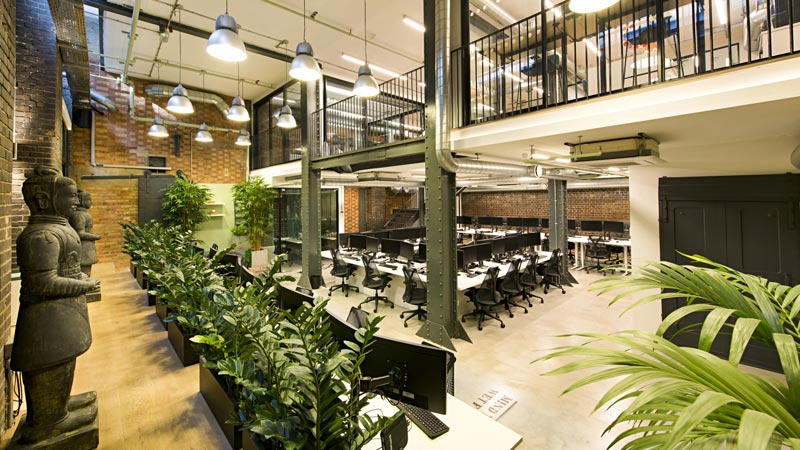
- It motivates employees in the office to adopt a greener, more environmentally friendly lifestyle and become more connected with nature.
- Working in a green office helps employees improve their physical and mental well-being, while increasing job satisfaction.
- It also serves as an effective communication tool for businesses to convey their sustainability efforts to the public.
3. How to Operate a Green Office
Below, Maison Office would like to introduce several methods to help businesses transform a traditional office into a green office.
- Reducing emissions and the use of non-renewable fuels
- Reducing paper consumption
- Reducing water consumption
- Waste management
We hope the following practical insights will help make your company’s workspace more environmentally friendly:
3.1 Reducing Emissions and the Use of Non-Renewable Fuels
Since much of our country’s electricity is generated from coal-fired thermal power plants, and coal is a non-renewable fuel, excessive electricity consumption can have a negative impact on the surrounding environment.
In this case, businesses should design the office in a way that maximizes the use of natural light from outside.
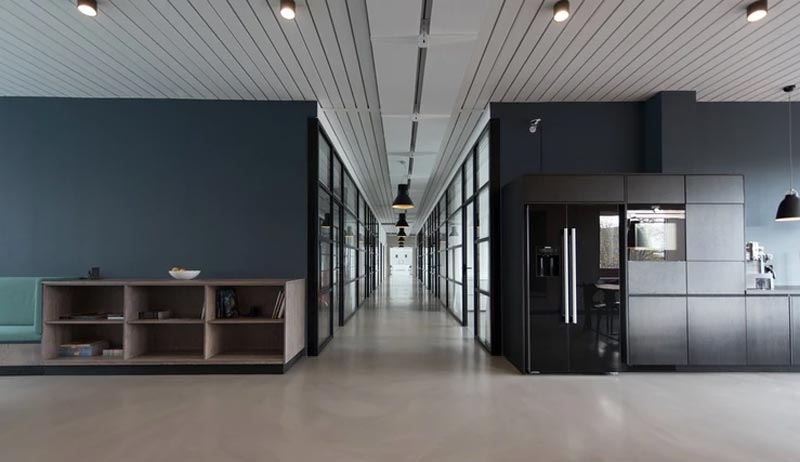
If possible, your business should install a sensor-based lighting system. Specifically, lights can use infrared sensors to turn on and off automatically.
In addition to lighting, you should turn off all other electrical equipment when not in use or when leaving the office, such as air conditioners, computers, printers, and other devices.
This practice helps your business save a significant amount of operating costs while reducing emissions and limiting the use of non-renewable energy sources that may negatively affect the environment.
3.2 Reducing Paper Consumption
Paper is produced from trees. The more paper is used, the more frequently deforestation occurs. Trees are one of the key sources of oxygen production and CO₂ absorption.
Therefore, reducing paper consumption in the office plays an important role in creating a more sustainable and environmentally friendly future.

In addition, office equipment such as printers and photocopiers can also have a negative impact on the environment.
Businesses should consider choosing energy-efficient equipment, using environmentally friendly ink, and selecting paper certified by the Forest Stewardship Council (FSC). Every action contributes to building a more sustainable future for humanity.
3.3 Reducing Water Consumption
Water is a vital natural resource. Urban development has caused water resources to become increasingly depleted.
There have been times when water shortages disrupted people’s daily lives and even affected the political and social stability of many countries.

Your business can contribute to sustainable development by designing a green, environmentally friendly office model. You can apply the following smart solutions in your workplace:
- In restroom areas, use automatic sensor-based faucets powered by infrared technology.
- Install toilets with an appropriate flushing volume to avoid wasting water resources.
- Actively communicate with all employees about the importance of water, thereby encouraging them to use this resource more efficiently and responsibly.
3.4 Waste Management
Waste, although discarded, can still be recycled if proper sorting methods are applied.
There are three main types of waste, each used for different purposes: organic waste such as leftover food and spoiled vegetables can be used as fertilizer for plants and crops; recyclable waste such as newspapers, magazines, and cans can be recycled for future use; and inorganic waste such as tissues, plastic bags, and rubber is classified as residual waste.

This classification in the office helps prevent resource waste and reduce emissions from waste treatment plants, which often rely on incineration or landfill methods, while closed-loop and environmentally friendly waste treatment systems are still not widely available.
4. Examples of Green Offices
There are many examples of green offices around the world. Some of them have become models for many companies to learn from and apply.
4.1 Nokia
Nokia’s headquarters in Finland can be considered one of the earliest green office models in the world. The company’s management pays attention to environmental impact down to the smallest details, including coffee cups.
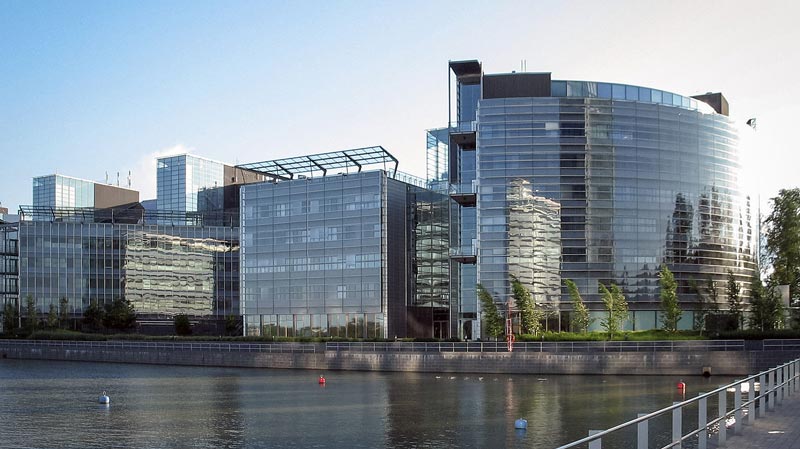
At Nokia, when employees have coffee at the office, they have two options: a disposable paper cup or a reusable glass cup.
If an employee wants to use a convenient paper cup, they have to pay a small fee. The glass cup is free of charge. It is not difficult to guess which option most Nokia employees choose for their morning coffee.
4.2 McDonald’s in Finland
McDonald’s stores in Finland apply another smart approach. Noticing that many of their branches are located near public bus stations, they encourage employees to use public transportation when commuting to work or attending meetings.
Each employee is provided with a bus card for transportation.
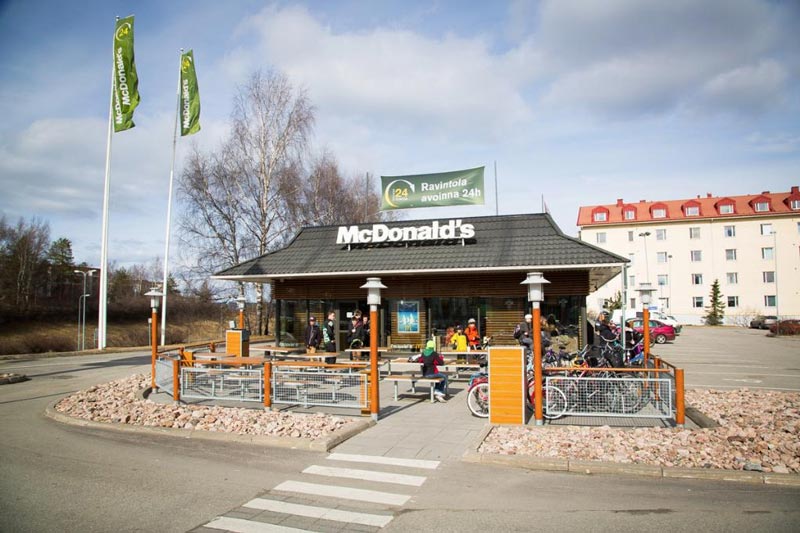
Of course, the choice of transportation remains up to each employee, but providing bus cards creates an incentive for employees to choose the bus instead of driving to work.
In addition, McDonald’s offices also apply several technology-based solutions to create a greener workspace, such as automatically turning off lights and office equipment at the end of working hours, and placing reminder notes throughout the office to encourage employees to turn off computer equipment.
Only FSC-certified office paper is used for printing documents and records. Cleaning staff are also trained to distinguish recyclable waste from inorganic waste.
4.3 Microsoft Office in Finland
Microsoft is one of the pioneering companies in allowing employees to work flexibly within an environmentally friendly office space.
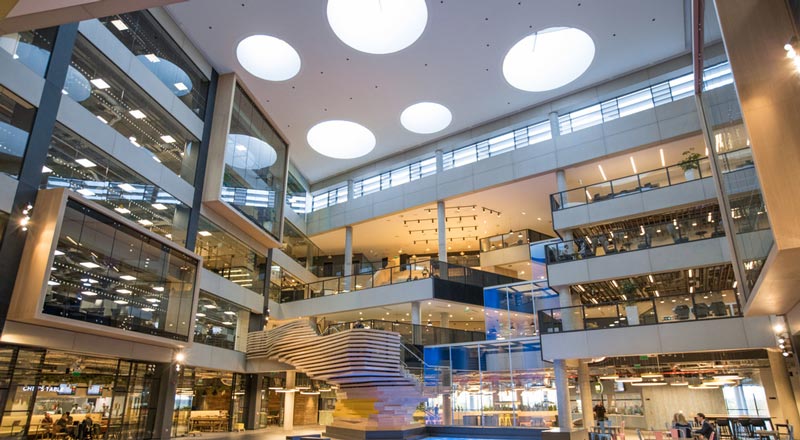
This helps significantly reduce energy consumption in the office and supports businesses in contributing to a more sustainable future. Specifically:
- 73% of office employees work remotely 1 to 3 days per week.
- 100% of surveyed employees are satisfied with their current working environment.
- The office maximizes the use of digital documents and invoices, while limiting paper printing to reduce environmental impact.
- Meetings must be booked in advance to optimize meeting room usage and avoid energy waste.
- Employees are encouraged to cycle to the office. Bicycles are also encouraged as a means of transportation when attending meetings.
4.4 Unilever Office in Pakistan
Through a systematically established process, Unilever’s office in Pakistan has taken positive actions to build a green office model, including:
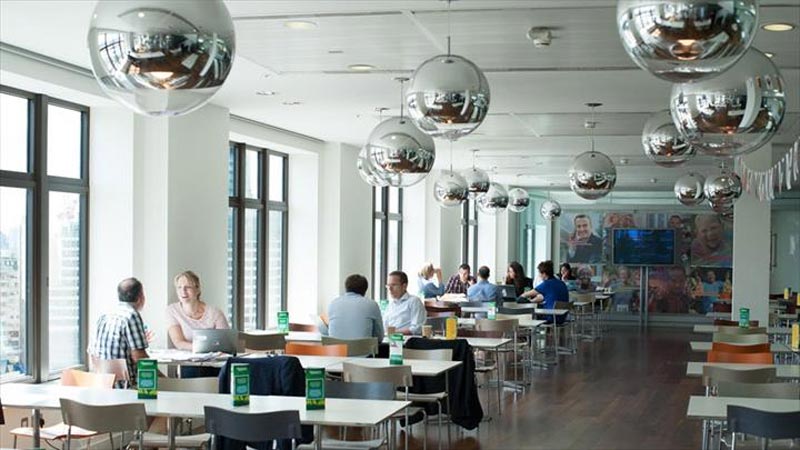
Unilever encourages office employees to use laptops instead of desktop computers to save electricity. To date, more than 85% of Unilever Pakistan employees use laptops for work.
Unilever uses halogen lights instead of other types of bulbs, as these lights consume 24% less electricity than traditional fluorescent bulbs.
4.5 Deloitte Office in the Netherlands
In the Netherlands, Deloitte’s consulting office is located in a building known as “The Edge,” which has attracted significant public attention.
Many architectural organizations around the world have described The Edge as the smartest building in the world.
All operations within this building are directed toward one key objective: optimizing building performance to achieve maximum energy savings. As soon as you arrive at the office, a smart application helps you find an available parking space.
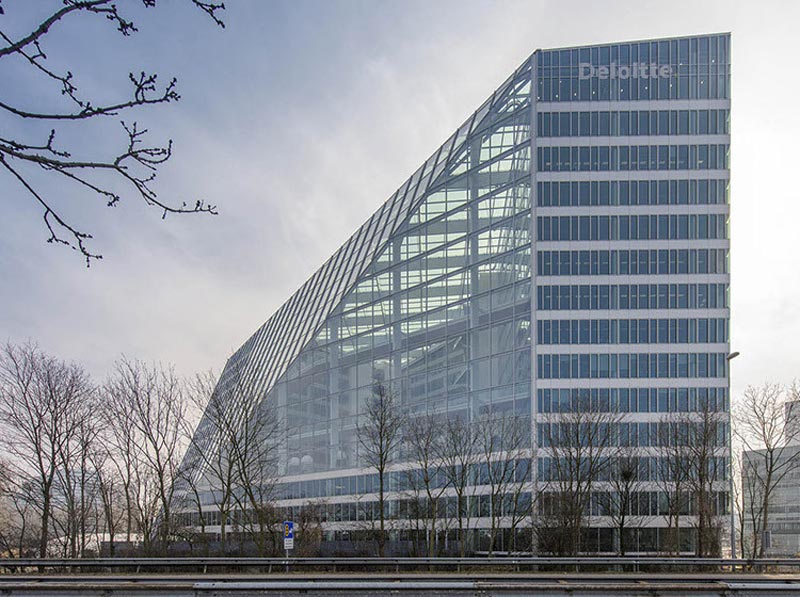
Employees do not have fixed desks, and this applies to everyone working in the office. The smart app helps each person find an available workstation. Regardless of where they sit, the temperature and lighting are adjusted according to their personal preferences.
The use of energy from solar panels has helped The Edge achieve an impressive BREEAM score of 98.4% — the UK standard for assessing a building’s environmental sustainability.
5. Green Offices Can Increase Work Productivity by 15%
There are many ways to help employees improve work performance, but one simple approach that can increase productivity by up to 15% is to decorate and arrange greenery harmoniously within the office.
Indeed, according to the findings of a recent study by the University of Queensland in Australia, decorating and arranging greenery in the workplace can make employees feel happier while increasing productivity by up to 15%.
Study co-author Professor Alex Haslam, a psychology professor at the University of Queensland, stated: “Offices with more greenery show employees that employers care about them and their well-being. Moreover, these office designs create a comfortable and airy environment, helping employees work more effectively.”
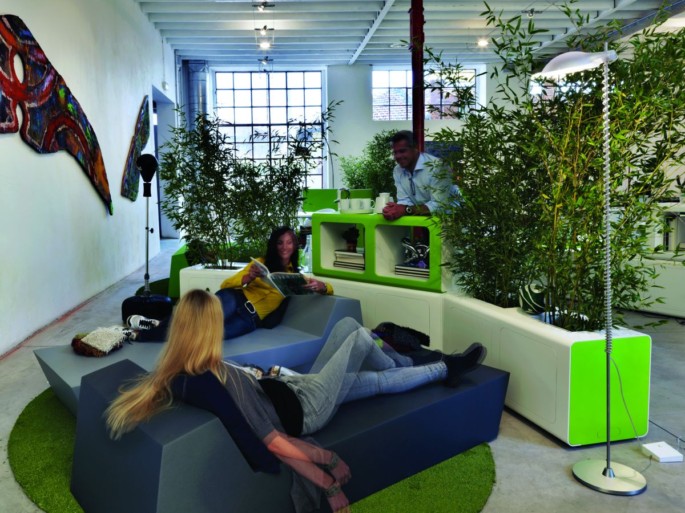
This study, considered the first assessment of the long-term effects of the surrounding environment on productivity, focused primarily on three workplaces in the UK and the Netherlands. Minimalist offices were decorated with greenery, while air quality, concentration levels, and workplace satisfaction were monitored over a two-month period.
“The findings show that investing in workplace decoration and enhancing the office environment helps maximize employees’ quality of life as well as work productivity,” Professor Haslam stated.
Integrating green spaces into the working environment has also been shown to help employees recover more quickly from stress, increase patience, and improve life satisfaction. In addition, green office spaces play a key role in offsetting the heat-reduction effects caused by urbanization.
The above are Maison Office’s insights into the concept of a green office, as well as its benefits and several notable examples of this office model when applied to the workplace. Thank you for reading this article.
6. Frequently Asked Questions About Green Offices
6.1 How is a green office different from a traditional office?
A green office focuses on energy savings, emission reduction, and creating a healthier working environment. Unlike a traditional office, a green office prioritizes natural light, reduced paper usage, and selective waste management. This model also encourages greener habits and stronger environmental awareness within the business.
6.2 Is a green office certification mandatory for businesses?
No. Businesses can apply green office principles on their own to improve the workplace environment. However, if they want to strengthen credibility and support communication efforts, they may consider certifications such as WWF Green Office or LEED.
6.3 Which organization introduced the Green Office standard?
The Green Office standard was introduced by the World Wide Fund for Nature (WWF). This system supports businesses in establishing environmentally friendly workplaces and tracking the effectiveness of CO₂ emission reduction. WWF also provides assessment tools and certification for this model.
6.4 Can small businesses apply the green office model?
Yes. Green Office is suitable for all types of businesses, including small and medium-sized enterprises. By adjusting how they use electricity, water, and paper, as well as managing waste properly, businesses can build a green workspace at a reasonable cost.
6.5 Is there any data proving the effectiveness of green offices?
Yes. A study by the University of Queensland in Australia found that offices with greenery can increase work productivity by up to 15%. WWF also recorded that its office in Finland reduced more than 12,400 tons of CO₂ over 14 years. These figures demonstrate the positive impact of the green office model on both the environment and workplace productivity.
Editor and content team manager at Maison Office.
With over 5 years of experience in consulting and extensive content editing in the real estate services and interior design field. Sharing valuable information with customers, partners, and attracting millions of views.


